Why Choose a 2.5G Switch for Your Network Needs?
In today's fast-paced digital world, choosing the right network equipment is crucial. A 2.5G Switch has emerged as a valuable option for many businesses. Mark Harris, a networking expert at Tech Innovations, stated, "The 2.5G Switch bridges the gap between traditional gigabit solutions and the demand for higher speeds." His insight highlights the growing importance of this technology.
Many organizations are experiencing increased data traffic. This surge calls for upgraded network solutions. A 2.5G Switch can enhance performance without a complete network overhaul. It offers an efficient upgrade path, especially for those still using older hardware.
However, as network needs evolve, some may question the necessity of a 2.5G Switch. Is it truly the best fit? Evaluating your specific requirements is essential. Businesses must consider their future growth and technology adaptation. Balancing cost and performance remains key. In this fast-evolving landscape, the 2.5G Switch stands out as a practical choice for forward-thinking companies.
Key Advantages of 2.5G Switches in Modern Networking
In today’s fast-paced digital world, 2.5G switches are gaining traction. They fit perfectly into environments that need more bandwidth without overcommitting to advanced technologies. With speeds supporting 2.5Gbps, users experience smoother data transfers. This is ideal for video streaming, gaming, and large file transfers.
One key advantage of 2.5G switches is their compatibility. They work with existing Cat5e and Cat6 cables. This allows an easy upgrade path for businesses without significant infrastructure changes. It reduces costs and downtime. However, some users may overlook potential bottlenecks in their network setup, which could undermine the benefits.
Tips for selecting the right switch: Assess your current network requirements and growth expectations. Analyze the devices connected to the switch. This will help in making a well-informed choice. Remember, adding more devices may impact performance.
Additionally, always ensure your network’s firmware is updated. Keeping software current can improve security and functionality. Some may forget this step, leading to vulnerabilities. Regular maintenance is essential for optimal performance.
Comparison Between 2.5G and Other Network Switch Speeds
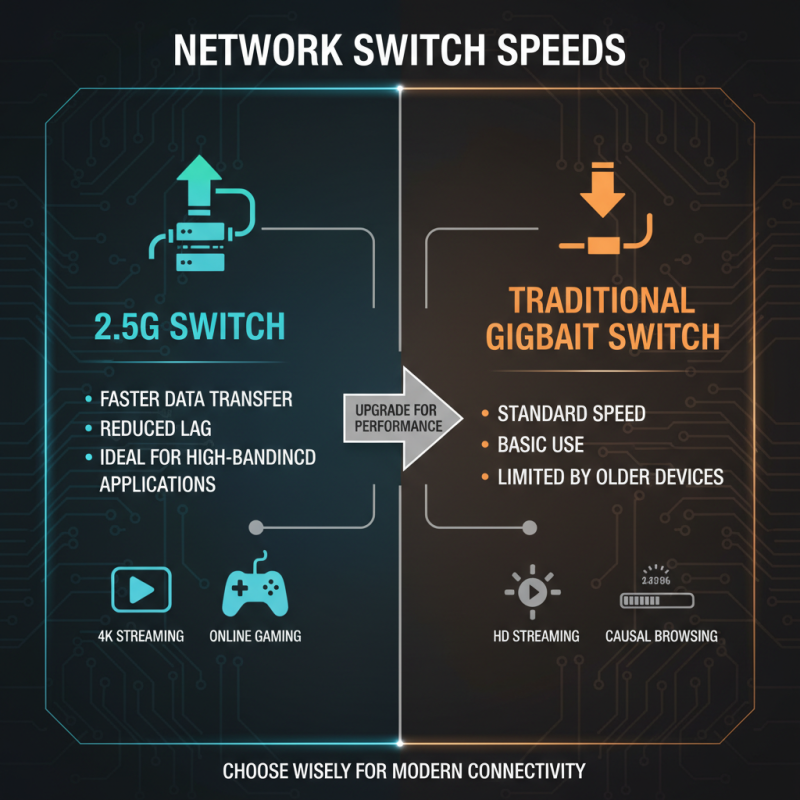
When considering network switches, the choice between 2.5G and other speeds is crucial. A 2.5G switch can provide faster data transfer than traditional gigabit switches. This speed is beneficial for modern devices running high-bandwidth applications. Video streaming and online gaming can greatly benefit from reduced lag times.
In comparison, a 1G switch may struggle with multiple devices. High-definition video can saturate a 1G connection quickly. Users often experience buffering and slow downloads. In contrast, with a 2.5G switch, multiple streams can run smoothly. However, not all devices support this speed. If your setup lacks compatible hardware, investing in a 2.5G switch may not yield expected results.
On the other hand, 10G switches promise even higher speeds but come with added costs. For many small to medium-sized networks, 2.5G strikes a balance between affordability and performance. Still, as network needs evolve, a review of current infrastructure is necessary. Are the benefits of 2.5G worth the transition for your specific environment? Reflecting on future growth helps determine if this choice makes sense for your network.
Suitable Applications for 2.5G Switches in Various Industries
In today's fast-paced digital landscape, 2.5G switches are carving a niche. Various industries stand to gain significantly from their unique capabilities. For instance, in educational institutions, increased bandwidth can improve online learning experiences. Faculty and students need smooth and fast access to resources. With 2.5G switches, schools can better support remote learning.
Healthcare organizations also benefit from these switches. Hospitals require reliable connections for various devices, like medical imaging and patient monitoring systems. A 2.5G switch ensures that critical data transfers happen seamlessly. This is vital during emergencies when every second counts. Yet, the implementation can be tricky. Some facilities may not have the infrastructure to support upgrades.
Moreover, manufacturing plants often rely on real-time data for operational efficiency. By integrating 2.5G switches, factories can connect more devices, enhancing communication. However, companies need to assess if their existing systems can handle the added traffic smoothly. It's not just about speed; it’s also about reliability and managing potential bottlenecks. Thus, while 2.5G switches promise advancements, careful planning and assessment are crucial.
Why Choose a 2.5G Switch for Your Network Needs?
This chart illustrates the suitable applications for 2.5G switches across various industries, highlighting the growing demand in each sector.
Cost-Effectiveness of Implementing 2.5G Switch Technology
Implementing 2.5G switch technology can be a smart choice for network upgrades. The cost-effectiveness of such switches is a key factor. Organizations often seek upgraded networks but hesitate due to expenses. A 2.5G switch offers a balance between speed and cost. It supports higher bandwidth without breaking the bank.
Consider a mid-sized enterprise looking to enhance its network. Upgrading to a 2.5G switch can be done without replacing existing infrastructure. This means less disruption. Installation can be simpler and quicker, saving valuable time. In many cases, a few adjustments are sufficient for a smooth transition.
Yet, it’s essential to review your needs. Not all networks require the speed and features of higher-end switches. Reflecting on actual usage can prevent over-investment. Moving to 2.5G may offer future-proofing benefits without the immediate need for more powerful technologies. Balancing needs and costs can yield better budget management.
Future Trends in Networking: The Role of 2.5G Switches
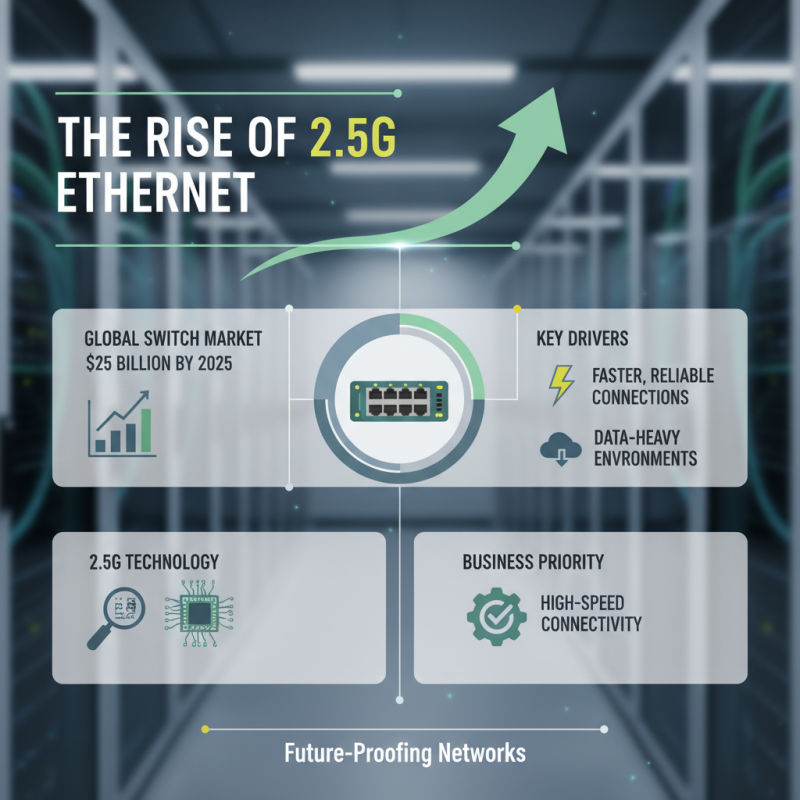
In the evolving landscape of networking, 2.5G switches play a crucial role. Recent industry reports indicate that the global market for Ethernet switches is expected to reach $25 billion by 2025, with 2.5G technology gaining traction. This demand is spurred by the increasing need for faster, reliable connections in data-heavy environments. Businesses are now prioritizing high-speed connectivity for seamless operations.
**Tip:** Assess your current network speed. If you're experiencing bottlenecks, consider a 2.5G switch as a viable upgrade.
Adopting 2.5G switches can enhance network efficiency. With data transfer rates of up to 2.5 Gbps, they bridge the gap between standard gigabit networks and the faster 10G solutions. This technology allows for improved performance in IoT applications and high-definition video streaming. A study revealed that companies using advanced switching technologies reported a 30% increase in operational efficiency.
**Tip:** Invest in training your IT staff. Understanding new technologies ensures optimal utilization of network resources.
Despite the advantages, transitioning to 2.5G switches requires careful planning. Compatibility issues may arise with existing hardware. Organizations should conduct thorough assessments to avoid costly mistakes. Balancing immediate needs with future scalability is essential for long-term success.