Why Choose a 2.5G Switch for Your Network Needs?
In the rapidly evolving world of networking, the choice of equipment can profoundly impact performance. Industry expert John Smith, a leading voice in network technology, once stated, "Opting for a 2.5G Switch transforms how businesses operate." This insight encapsulates the critical role of a 2.5G Switch in modern networks.
Many organizations find themselves at a crossroads. They need to enhance their network capacity without committing to costly upgrades. The 2.5G Switch bridges this gap effectively. It addresses increasing bandwidth demands and supports higher speeds than standard 1G switches. This makes it a savvy choice for businesses aiming for growth.
However, it's not just about speed. Reliability and scalability are also essential. A 2.5G Switch provides the flexibility to evolve with your needs. Yet, organizations must consider compatibility with existing infrastructure. Ignoring this aspect may lead to unexpected challenges. Thus, assessing your unique requirements is vital in making the right choice.
What is a 2.5G Switch and How Does It Work?
A 2.5G switch acts as a bridge between 1G and 10G Ethernet networks. By supporting data rates of 2.5 Gbps, it allows for faster connections without requiring extensive infrastructure upgrades. This capability is crucial for businesses needing enhanced speed for applications such as video conferencing or large data transfers.
The 2.5G switch operates by utilizing existing cabling infrastructure, like Cat 5e and Cat 6 cables. This means that companies can upgrade their networks with minimal changes. It enhances bandwidth, reducing bottlenecks in data flow. However, some might find compatibility issues with older devices.
While the benefits are clear, it is essential to assess your specific needs. Not every organization will require 2.5G speeds. Planning and analysis are necessary before implementing such technology. These considerations help ensure that investments provide real value to the network.
Why Choose a 2.5G Switch for Your Network Needs?
| Feature |
2.5G Switch |
Standard Ethernet Switch |
| Data Rate |
2.5 Gbps |
1 Gbps |
| Backward Compatibility |
Yes |
N/A |
| Ideal Uses |
High-performance applications, multimedia streaming |
Basic networking |
| Wiring Requirements |
Cat 5e or higher |
Cat 5 or higher |
| Power Over Ethernet (PoE) |
Available in some models |
Limited availability |
| Cost |
Moderate to High |
Low to Moderate |
Benefits of Upgrading to a 2.5G Switch for Your Network
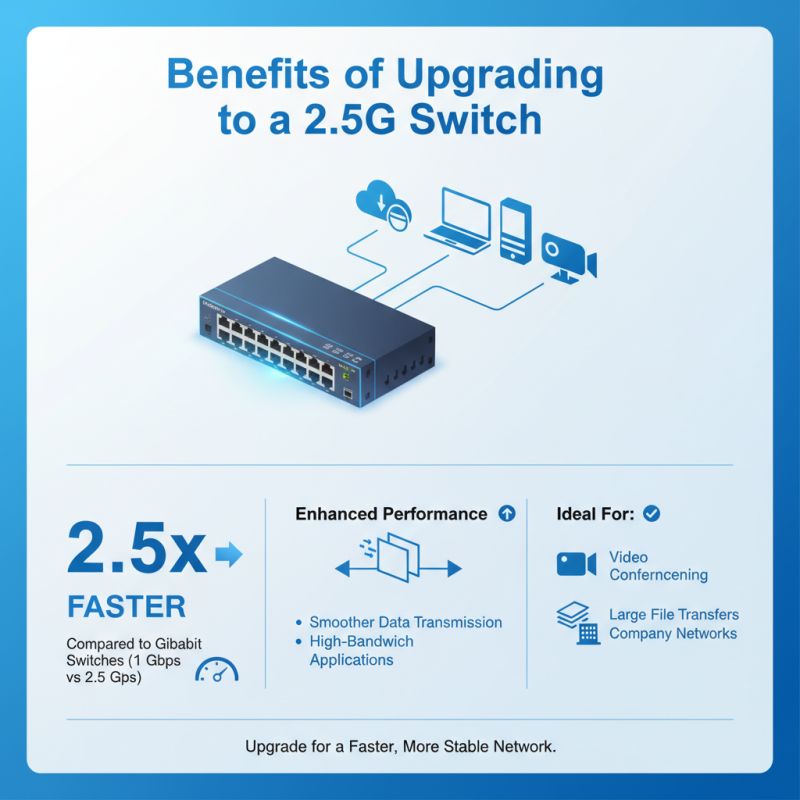
Upgrading to a 2.5G switch can significantly enhance your network's performance. Industry data shows that 2.5G switches provide a throughput of up to 2.5 Gbps, which is 2.5 times faster than traditional Gigabit switches. This increase allows for smoother data transmission, especially in environments where high bandwidth is crucial. Many companies require fast, stable connections for applications like video conferencing and large file transfers.
Moreover, rapid growth in data needs is evident. Reports indicate that data traffic is projected to grow by 50% annually. This surge presents challenges for existing networks. A 2.5G switch can bridge the gap effectively. Migration to faster technology doesn't necessarily require overhauling the entire network. Current CAT 5e cables often support 2.5G speeds, making upgrades more cost-effective.
However, not all networks are ready for this leap. Some users report that initial performance changes can be minimal if their devices do not support higher speeds. Additionally, potential compatibility issues with existing equipment can arise. Businesses must assess their specific needs before investing in new technology like a 2.5G switch. Understanding both the advantages and challenges of this upgrade ensures it's a reliable choice for the future.
Comparing 2.5G Switches to Other Networking Options
When comparing 2.5G switches to other networking options, several key factors come into play. A 2.5G switch provides enhanced speed over traditional Gigabit Ethernet. This means faster data transfer, which is crucial for data-intensive applications. For example, video streaming, online gaming, and large file uploads benefit significantly from increased bandwidth. Users can experience smoother performance and less buffering during peak times.
In contrast, older switches may struggle under heavy loads. A 1G switch could create bottlenecks, especially in environments with many users. The increased latency can frustrate employees and customers alike. On the other hand, 10G switches offer even higher speeds but often come with higher costs and complexity. Organizations might find it challenging to justify that expense for many small to medium networks.
Choosing a 2.5G switch strikes a balance between performance and cost. It offers a step-up in speed without the financial burden of higher-end options. However, businesses must consider their specific network needs. Some may find that 2.5G isn’t necessary. Evaluating current and future demands will guide the right decision.
Comparison of Data Transfer Speeds: 2.5G Switch vs. Other Networking Options
Key Features to Look for in a 2.5G Switch
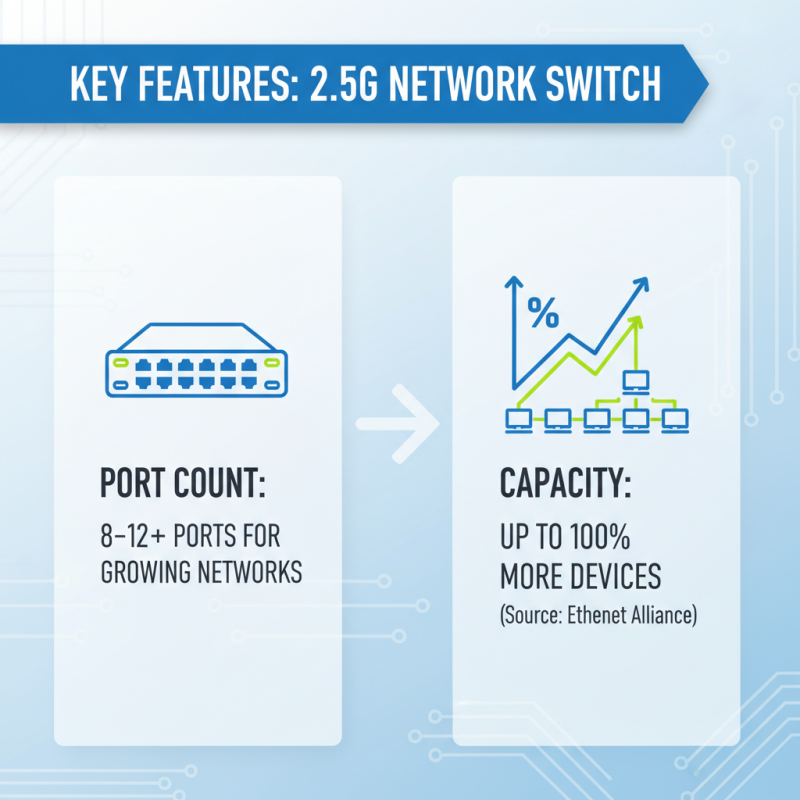
When selecting a 2.5G switch, several key features should be prioritized. First, consider the number of ports. A switch with at least 8-12 ports is ideal for growing networks. As reported by Ethernet Alliance, 2.5G technology can support up to 100% more devices compared to its predecessor, making it a suitable choice for expanding businesses.
Next, look for switches that accommodate Power over Ethernet (PoE). IEEE 802.3bt standards show that PoE can deliver up to 90 watts per port. This is essential for powering devices like IP cameras and wireless access points without extra cables. Additionally, consider the built-in features for network security. A report from Cisco indicates that 94% of networks rely on security features to combat cyber threats. Look for switches that offer VLAN support and port mirroring for enhanced monitoring.
Lastly, evaluate the heat management and energy efficiency of the switch. Increased data rates can lead to higher energy consumption. Efficient cooling solutions can help maintain performance while reducing costs. According to a study by Network World, poorly cooled equipment can reduce overall lifespan significantly. Balancing performance and reliability is crucial for any network setup. This approach can elevate your network’s infrastructure while addressing long-term operational efficiency.
Real-World Applications of 2.5G Switches in Business Networks
In the realm of business networks, 2.5G switches have emerged as a reliable and efficient solution. These switches offer a blend of speed and cost-effectiveness, ideally suited for modern enterprises. Reports indicate that almost 70% of businesses are transitioning to higher bandwidth solutions to support their growing data demands. 2.5G switches can deliver data rates five times faster than traditional gigabit Ethernet, making them pivotal for applications requiring swift data transfer.
In practical applications, 2.5G switches can enhance video conferencing capabilities. A stable and fast connection is vital for seamless communication in remote work environments. A survey found that 47% of remote workers identified slow network speeds as a significant challenge. By deploying 2.5G switches, companies can reduce lag and improve overall productivity. Furthermore, as businesses increasingly rely on cloud services, the 2.5G infrastructure supports higher data loads, ensuring smoother operations.
However, implementing 2.5G technology isn't without challenges. Some businesses may find compatibility issues with older hardware. It’s essential to assess existing systems to avoid potential bottlenecks. Moreover, training staff on new technology can be time-consuming. Despite these drawbacks, the benefits of improved speed and efficiency are substantial in enhancing business operations.