How to Choose the Best 10G Switch for Your Network Needs?
In today's digital landscape, selecting the right networking equipment is crucial. Many organizations are shifting to higher bandwidth needs, making the choice of a 10G Switch more significant. According to networking expert John Doe, "Choosing the right 10G Switch can make or break your network's performance." This emphasizes the importance of making an informed decision.
A 10G Switch offers speed and efficiency for demanding applications. However, not all switches are created equal. Factors like port configuration, scalability, and management features are vital. An ill-suited switch can lead to bottlenecks and reduced productivity. It's a common mistake to overlook these details in favor of initial cost savings.
Understanding your specific network needs is essential. While some may prioritize price, others might focus on reliability. A balance is needed to avoid future frustrations. Remember, the right 10G Switch can significantly enhance network performance and longevity. But an unwise choice may require costly interventions later on. Reflect on these aspects carefully before making your selection.
Understanding Your Network Requirements for 10G Switches
When selecting a 10G switch, understanding your network requirements is crucial. Consider the size of your network. A small office with a few devices may not need the same capabilities as a large enterprise. Assess the current and future needs. Will your network grow? If yes, plan for scalability.
Tips: Evaluate how many devices will connect to the switch. This affects performance. Always consider future-proofing your investments. Buying a switch that can handle more traffic than currently needed may save costs later.
Look into the types of connections your devices require. Some may need fiber connections, while others will use copper. Not all switches support both types. Research the benefits of each to determine best fit.
When analyzing network traffic patterns, it’s helpful. High traffic areas may need dedicated ports. Monitoring tools can help reveal bottlenecks. Reflect on your current setup and ask whether it meets your needs today.
Network Requirements for 10G Switches
Key Features to Consider in a 10G Switch
When choosing a 10G switch, several key features are essential.
Port density is crucial. Organizations often need multiple
10G ports to accommodate high-bandwidth applications. According to a recent industry report, more than
70% of businesses require 16 or more ports
for operational efficiency.
Another important aspect is switching capacity. Look for switches
with sufficient backplane capacity. This ensures that data can flow without bottlenecks. A switch with a
1.28 Tbps capacity can handle advanced routing and switching
needs without issues, which many companies struggle with.
Layer 2 and Layer 3 capabilities are also significant.
Layer 2 switches can provide fast local network handling, while Layer 3 contributes to effective routing.
Surprisingly, less than 40% of networks leverage these advanced
features effectively. Monitoring tools integrated into the switches can help analyze traffic patterns and
improve performance. However, many users overlook this functionality.
Balancing features with your network’s specific requirements
can be challenging but necessary for optimization.
Comparing Different Types of 10G Switches
When selecting a 10G switch, understanding the types available is crucial. There are managed and unmanaged switches. Managed switches offer greater control. They allow for traffic monitoring and VLAN configurations. On the other hand, unmanaged switches are simpler. They require less setup but provide fewer features.
You might consider fiber-optic vs. copper connections. Fiber-optic switches support longer distances. They are ideal for larger networks. Copper switches are often more affordable and user-friendly. However, they have limitations with distance. This choice heavily depends on your network’s layout and future needs.
Power consumption is also an important factor. Some switches are energy-efficient, reducing your electricity bills. Others might be more powerful but also cost more to operate. Reviewing your specific needs can help you choose wisely. Balance functionality with cost-effectiveness. Ultimately, assess what features matter most for you.
Evaluating Budget and Cost-Effectiveness of 10G Switches
When considering a 10G switch, budget is crucial. Prices can vary significantly based on features. A good switch might cost from hundreds to thousands of dollars. Determine your network needs before purchasing. Identify whether you need more ports or higher performance. This helps in narrowing down your options.
Cost-effectiveness goes beyond just the upfront price. Think about long-term expenses. Will the switch require additional licenses? Are there maintenance costs? Also, consider power consumption. Some switches may save on energy bills. These factors can influence your overall budget.
Evaluate potential growth as well. A switch that meets your needs today may not suffice tomorrow. Assess expansion options without incurring high costs. Sometimes, investing a bit more now prevents larger expenses later. It's vital to balance quality against budget constraints. Making a thoughtful choice today pays off in the future.
Future-Proofing Your Network with Scalable 10G Solutions
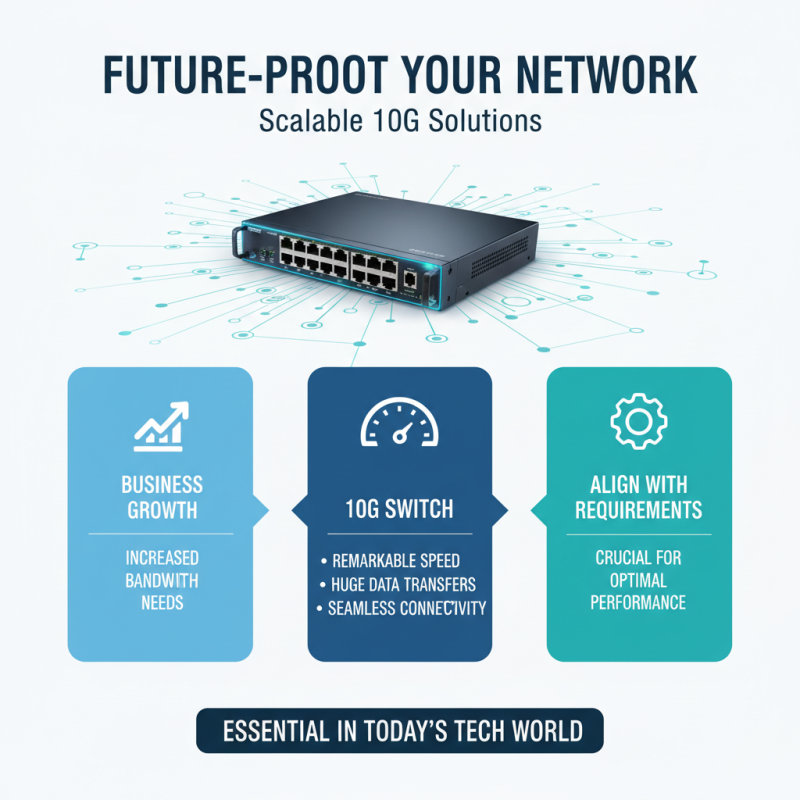
Future-proofing your network with scalable 10G solutions is essential in today's technology-driven world. As businesses grow, their network bandwidth needs can shift dramatically. A 10G switch offers remarkable speed, handling huge data transfers and ensuring seamless connectivity. But aligning this capability with your specific requirements is crucial.
Choosing a switch isn't just about the speed. Consider the number of ports you will need now and in the future. Opt for models that offer flexibility for upgrades, because technology evolves. The infrastructure should support additional devices without causing bottlenecks. Ideally, a good switch will allow for integration with future technologies, but one must also reflect on their current setup. An overly complex switch might not align with simpler needs, causing frustration rather than enhancement.
Assessing your network's architecture is important. Are you prioritizing speed over reliability? A balance is necessary. Additionally, some switches may come with features that you may not use. Investing in unnecessary capabilities can be wasteful. Analyze your actual usage and plan accordingly. A well-thought-out choice today can save you from costly adjustments tomorrow.