2026 How to Choose the Best 10g Switch for Your Network?
As businesses increasingly adopt data-intensive applications, their network infrastructure must keep pace. A 2023 report from IDC indicates the demand for bandwidth is expected to rise by 30% annually. In this scenario, the choice of a 10g switch becomes crucial. It not only affects data transfer rates but also overall network performance.
Selecting the right 10g switch requires an understanding of your current network needs and future growth. Inadequate switches can lead to bottlenecks, increasing latency and hindering productivity. According to a recent Gartner study, organizations that invest wisely in high-performance switches can improve their operational efficiency by up to 20%.
Consider factors such as scalability, port density, and power consumption. Not all 10g switches are created equal; some may lack features essential for modern applications. The disparity in quality and capabilities can lead to serious implications for network reliability and security. Understanding these differences is key to making an informed decision for your network's future.
Factors to Consider When Choosing a 10G Switch for Your Network
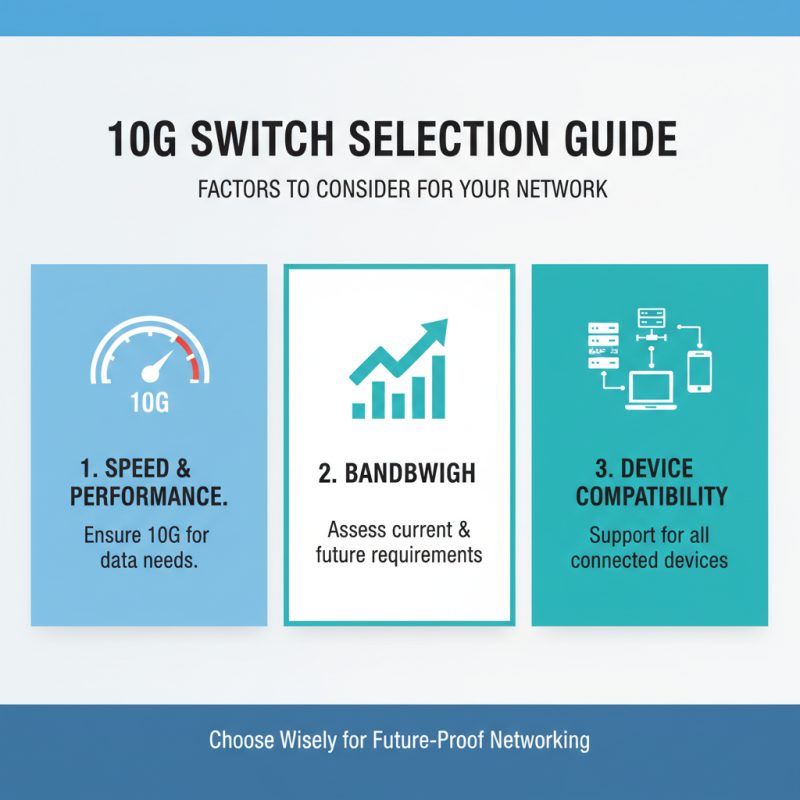
When selecting a 10G switch for your network, several critical factors come into play. Speed and performance are paramount. A 10G switch should handle your data needs effectively. Assess your current and future bandwidth requirements. Ensure the switch supports sufficient speed for all connected devices.
Consider the number of ports. More ports provide flexibility. Look for expansion options as your network may grow. Think about different types of connections, such as fiber or copper, based on your existing infrastructure.
Tips: Always check for compatibility with existing hardware. Prioritize features like Quality of Service (QoS) to manage traffic efficiently. Pay attention to user reviews and comparisons. Trustworthy sources can provide insights.
Finally, evaluate management features. A user-friendly interface can save time. Complex configurations may lead to errors. Some switches offer more intuitive controls than others. Interference can occur; reflect on the environment where the switch will be placed. Not every setting is ideal for optimal performance.
Types of 10G Switches: Managed vs. Unmanaged
When choosing a 10G switch, it’s crucial to understand the difference between managed and unmanaged switches. Managed switches offer advanced features for network management, including VLAN support, traffic monitoring, and Quality of Service (QoS) settings. These switches provide greater control and flexibility. However, this added complexity can be intimidating for network novices.
Unmanaged switches, on the other hand, are straightforward and easy to use. They plug in and work immediately without any configuration required. This simplicity makes them suitable for smaller networks or home offices. Yet, the lack of control may be limiting as your network grows. You might find yourself needing more advanced features sooner than expected.
Consider your specific needs. If you have a dynamic environment, a managed switch is often worth the investment. If you need a quick, plug-and-play solution, an unmanaged switch may suffice. Both types have their strengths and weaknesses. A careful evaluation will lead to the best choice for your network’s demands. Remember, what works today may not suit your future requirements.
Comparison of Managed vs. Unmanaged 10G Switches
This chart compares the key aspects of Managed and Unmanaged 10G switches, including Price, Features, Ease of Management, Scalability, and Performance. Managed switches generally offer more features and better scalability, making them suitable for complex networks, while unmanaged switches are more cost-effective and simpler to use in basic setups.
Evaluating the Port Density for Your Network Needs
When evaluating port density for your network needs, it's crucial to consider how many devices will connect. Port density refers to the number of ports a switch has. A higher port density can reduce the need for additional switches. This can keep your network infrastructure simple and efficient. However, a dense arrangement may lead to airflow issues. Keeping your network organized is vital.
Think about future growth when choosing port density. Will you add more devices soon? A switch with fewer ports may seem sufficient now, but might not meet future demands. Assess the current and anticipated number of users, devices, and applications. An overestimated need can lead to wasted resources. Too many unused ports can complicate management without delivering benefits.
Also, consider the placement of your switch. Space constraints can impact your choice. A compact switch might be necessary in tight spots, but it could limit expandability. Balancing space, performance, and future needs is essential. Knowing these factors can help in making an informed choice about switch options.
Understanding Speed and Latency Requirements
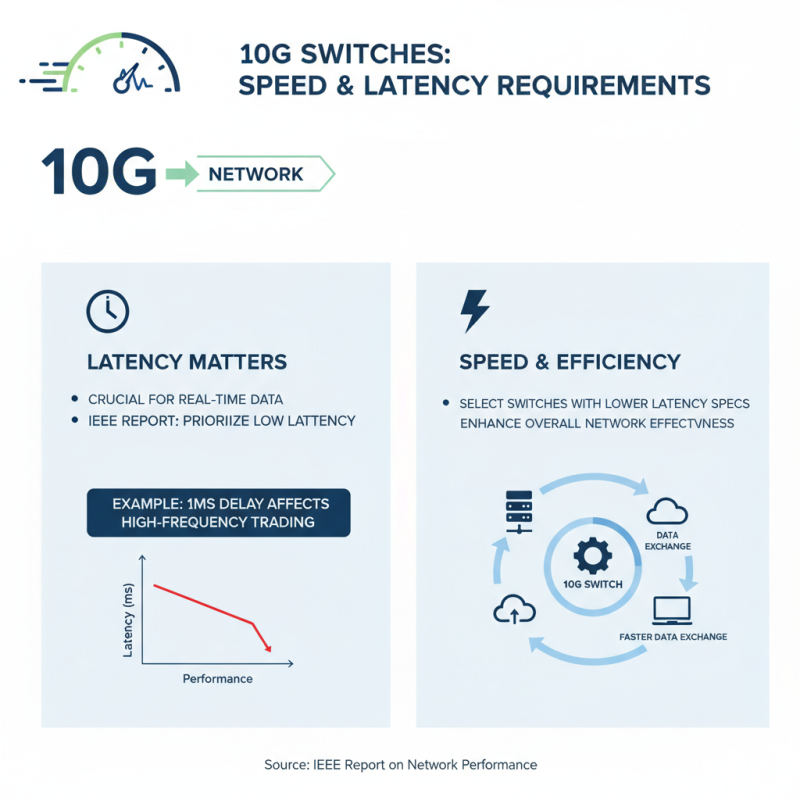
When selecting a 10G switch for your network, understanding speed and latency is crucial. According to a report by the IEEE, low-latency connections are essential, especially for applications requiring real-time data exchange. For instance, even a 1-millisecond increase in latency can affect performance in high-frequency trading systems. Prioritizing switches with lower latency specifications can enhance the overall effectiveness of your network.
Tip: Prior to purchasing, assess your specific applications. Determine if they are sensitive to latency variations. For general office use, slight delays may not matter. However, streaming or gaming applications demand rigorous speed standards.
Consider your cabling and distance when evaluating speed requirements. Fiber optic cables are optimal for long distances and can support higher speeds. Copper might suffice for shorter runs but comes with distance limitations. Understanding these nuances can prevent future bottlenecks. A study from IHS Markit found that approximately 30% of network slowdowns are due to suboptimal hardware setups.
Tip: Regularly analyze your network performance. Utilize monitoring tools to identify speed or latency issues early. This proactive approach can save time and resources in the long run.
Budget Considerations for 10G Switch Purchase and Future Upgrades
When considering a 10G switch for your network, budget is a critical factor. According to industry analysis, the average cost of a 10G switch ranges from $1,000 to $5,000, depending on specifications and features. For many businesses, this can be a substantial investment. Understanding your exact needs can help align costs effectively with your operational goals.
Future upgrades are another consideration. Data from a recent survey shows that 70% of companies expect to increase their network capacity within the next three years. Investing in a 10G switch that supports modular upgrades can save significant costs down the line. Some switches allow for adding ports as needed, which can be more cost-effective than purchasing entirely new equipment. This approach ensures your network remains scalable while managing budgets efficiently.
While performance is crucial, reliability should not be overlooked. The choice of a 10G switch should factor in warranty terms and customer support services. Companies reporting downtime due to inadequate switching capabilities face costs of over $20,000 per incident. It's vital to weigh these aspects carefully to make an informed financial decision for the future.