2025 How to Choose the Best IP67 Poe Splitter for Your Networking Needs
In the rapidly evolving world of networking solutions, the demand for robust and reliable equipment has never been more critical. As systems increasingly rely on Power over Ethernet (PoE) technology, the need for high-quality components like the IP67 PoE splitter becomes paramount. According to a recent report by the Networking Equipment Market Research Group, the global market for PoE devices is projected to reach $1.58 billion by 2025, driven by the surge in IoT applications and the expansion of smart infrastructure. It’s imperative for users to understand how to select the right IP67 PoE splitter that aligns with their networking needs in this competitive landscape.
Industry expert Dr. John Turner, a leading figure in networking technology, emphasizes the importance of quality in these components, stating, “A reliable IP67 PoE splitter not only ensures the stability of your network but also enhances the longevity of connected devices.” As organizations look to invest in outdoor applications and harsh environments, where dust and water intrusion can threaten performance, the IP67 rating proves essential. This guide aims to shed light on the critical factors to consider when selecting the best IP67 PoE splitter, ensuring your networking infrastructure is future-ready and resilient against environmental challenges.
Understanding IP67 Rating and Its Importance for Poe Splitters
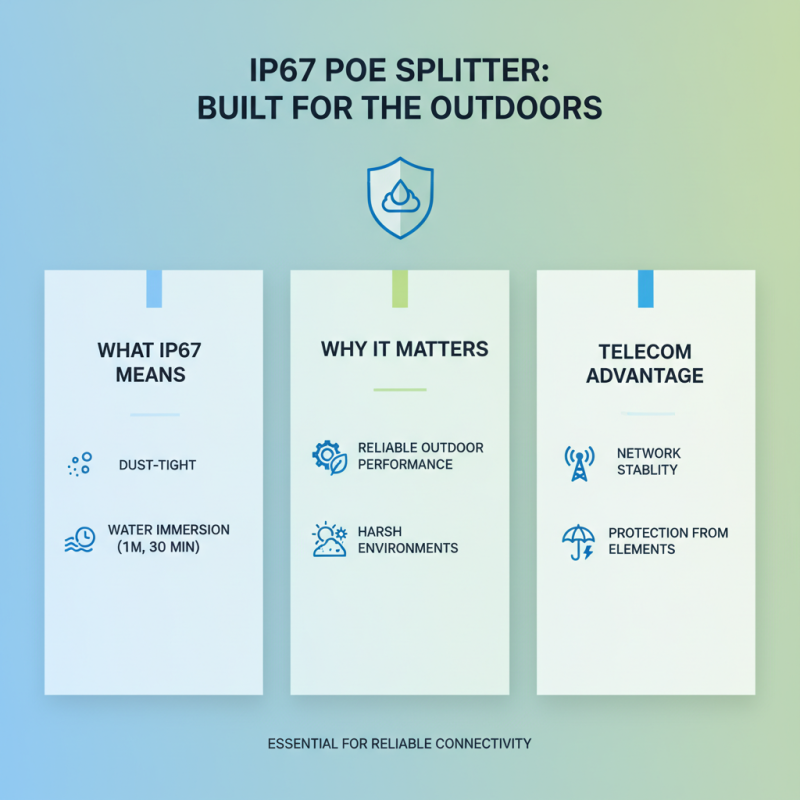
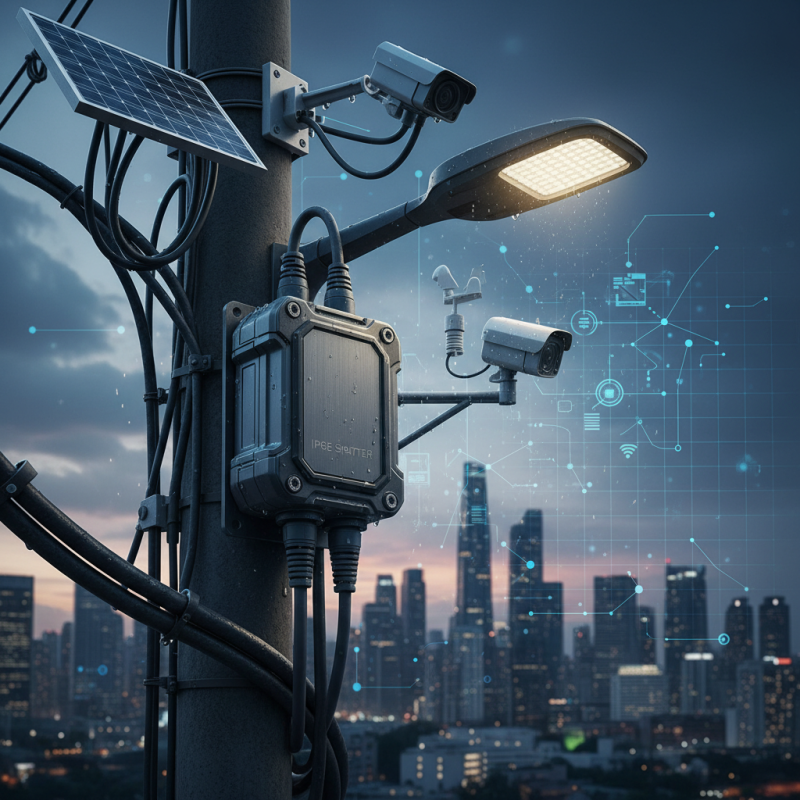
When choosing an IP67 PoE splitter, it is crucial to understand the significance of the IP67 rating. This designation indicates that the device is fully dust-tight and can withstand immersion in water up to 1 meter for 30 minutes. According to industry reports, equipment with an IP67 rating is essential for outdoor applications, as it ensures reliable performance in harsh environmental conditions. In telecommunications, where devices are often exposed to rain, humidity, and dirt, the IP67 rating provides a layer of protection that is vital for maintaining network stability and performance.
When selecting a PoE splitter with an IP67 rating, consider the installation environment. For instance, a splitter placed in an area with high moisture levels or varying temperatures must not only meet the IP67 standard but also maintain consistent energy delivery. Additionally, experts suggest checking for certifications such as UL or CE, which can further validate the quality and safety of the product.
Tips:
- Always verify the manufacturer's specifications to ensure that the PoE splitter matches your specific environmental requirements.
- Consider the cable lengths and types used in conjunction with the splitter, as these can affect the overall networking performance when deployed in challenging conditions.
- Regular maintenance and inspections are recommended to ensure long-lasting operation, especially in outdoor settings.
Key Features to Consider When Selecting Poe Splitters
When selecting an IP67 PoE (Power over Ethernet) splitter for your networking needs, there are several key features to consider ensuring optimal performance and reliability. First and foremost, the environmental durability of the splitter is crucial. An IP67 rating indicates that the device is both dust-tight and can withstand immersion in water up to 1 meter for 30 minutes, making it suitable for outdoor or industrial settings. According to a report by MarketsandMarkets, the global PoE market is projected to grow from USD 1.3 billion in 2020 to USD 2.0 billion by 2025, emphasizing the increasing demand for robust networking solutions that can meet diverse environmental challenges.
Another important aspect to evaluate is the power output capacity of the PoE splitter. Different devices require varying power levels, typically ranging from 15.4W for IEEE 802.3af to 30W for IEEE 802.3at. It's essential to match the splitter’s power output to the needs of your specific applications, particularly if you are powering multiple devices or high-demand equipment. Additionally, consider the data transmission capabilities; a quality PoE splitter should support high data rates, ideally up to gigabit speeds, to ensure seamless connectivity, especially in high-traffic networks. Research from the Institute of Electrical and Electronics Engineers (IEEE) indicates that having a reliable PoE infrastructure can reduce installation costs by up to 30%, further solidifying the need for choosing the right splitter for your networking setup.
Key Features of IP67 Poe Splitters
Evaluating Poe Splitter Compatibility with Your Networking Equipment
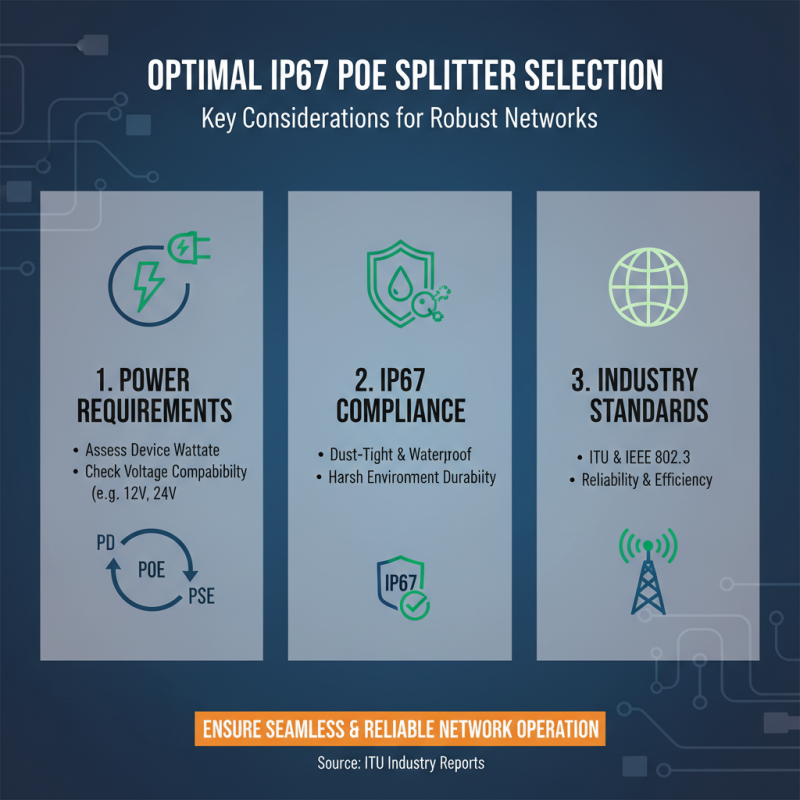
When selecting an IP67 PoE (Power over Ethernet) splitter for your networking needs, assessing compatibility with your existing equipment is paramount. The primary consideration should be the specifications of the devices you aim to power, including their voltage and wattage requirements. Most PoE splitters provide specific output voltages, typically 5V, 12V, or 24V. Ensuring that the output voltage matches the needs of your device is crucial to avoid damage and maintain optimal performance.
Additionally, it's important to evaluate the data transmission capabilities of the PoE splitter. Check whether the splitter supports the necessary IEEE standards, such as IEEE 802.3af or IEEE 802.3at, to guarantee seamless operation with your PoE-enabled devices. Moreover, connectivity options, such as RJ45 ports and Ethernet speeds, should align with your networking equipment to prevent bottlenecks and ensure efficient data flow. By closely examining these compatibility factors, you can confidently choose a PoE splitter that integrates perfectly with your networking setup while enhancing functionality and reliability.
Assessing Electrical Specifications and Power Requirements
When selecting an IP67 PoE (Power over Ethernet) splitter, it is crucial to assess the electrical specifications and power requirements to ensure seamless operation within your networking setup. According to recent industry reports from the International Telecommunication Union (ITU), the demand for efficient PoE solutions has surged. This is particularly significant in environments where devices are exposed to harsh conditions, requiring adherence to safety and operational standards to prevent failures. Ensuring that the splitter complies with these standards is not only vital for reliability but also impacts the overall efficiency of your network.
Moreover, the power output specifications must match the needs of your connected devices. Most PoE splitters support various power outputs ranging typically from 15.4W to 30W, as noted in statistics from the IEEE 802.3af and 802.3at standards. It’s essential to evaluate the total power consumption of your network devices to prevent underpowering or overloading. A well-calibrated splitter should provide enough power while maintaining stable Ethernet connectivity. Choosing a model with features like built-in surge protection could also mitigate risks associated with voltage spikes, further securing the integrity of your network performance in demanding conditions.
Comparing Various Brands and Models for Performance and Reliability
In today's rapidly evolving technological landscape, selecting the right IP67 Poe splitter is crucial for maintaining reliable network performance, especially in outdoor and harsh environments. Various brands and models offer different features, and understanding their performance metrics and reliability ratings can significantly impact your network's efficiency. According to a report published by the Ethernet Technology Consortium, the optimal Poe splitter should provide a minimum output of 15.4 watts, ensuring compatibility with a wide range of powered devices, while operating without thermal throttling at high ambient temperatures.
When comparing different models, it's essential to review their ingress protection ratings and environmental tolerance. A recent analysis conducted by Network Accessories shows that models with a rugged design and materials that can withstand extreme conditions tend to exhibit lower failure rates, evidenced by reliability data that indicates less than 5% breakdown in harsh weather over a typical usage period. Furthermore, the quality of the power management circuitry plays a vital role; efficient designs can minimize power loss and ensure stable voltage output, which is critical for sensitive devices. By assessing these performance and reliability indications, users can make informed decisions that align with their specific networking needs.