How to Choose the Best Poe Splitter for Your Networking Needs
In today's rapidly evolving digital landscape, the demand for reliable and efficient networking solutions has never been greater. According to recent industry reports, the global Power over Ethernet (PoE) market is projected to witness substantial growth, driven by the increasing need for enhanced connectivity and power efficiency in various sectors. As more organizations adopt IoT devices and smart technologies, the role of PoE splitters becomes crucial in ensuring seamless network performance. A Poe splitter enables devices to receive both power and data over a single Ethernet cable, streamlining setup and reducing wiring clutter.
With the variety of Poe splitters available on the market, choosing the most suitable option for your networking needs can be challenging. Factors such as power output, compatibility with existing devices, and installation ease are essential considerations that affect overall efficiency and reliability. Additionally, as reported by leading technology analysts, the right Poe splitter can significantly affect network stability and device performance, allowing organizations to maximize their investments in technology infrastructure. By understanding the critical features and specifications of Poe splitters, users can make informed decisions to optimize their networking capabilities.
Understanding PoE Technology and Its Applications
Power over Ethernet (PoE) technology has revolutionized how devices communicate and power themselves by allowing electrical power and data to be transmitted over standard Ethernet cables. According to a report by MarketsandMarkets, the global PoE market is projected to grow from USD 1.65 billion in 2020 to USD 2.98 billion by 2025, reflecting an increasing reliance on PoE for efficient connectivity solutions. This technology is primarily used in various applications, such as IP cameras, wireless access points, and VoIP phones, making it essential for modern networking needs.
The advantages of PoE are evident in its ability to simplify installations and reduce costs associated with separate power supplies. By eliminating the need for additional electrical wiring, businesses can save both time and resources. Furthermore, the IEEE 802.3bt standard, which allows for higher power output, enables the use of more power-hungry devices over the network. Research indicates that nearly 80% of organizations that implement PoE experience significant operational efficiency improvements. With applications extending to smart buildings and the Internet of Things (IoT), understanding PoE technology is crucial for those looking to optimize their networking infrastructure effectively.
Power over Ethernet (PoE) Splitter Comparison
This chart compares different PoE splitter types based on output power and maximum distance. Choosing the right PoE splitter is essential for ensuring efficient networking and device functionality.
Types of PoE Splitters Available in the Market
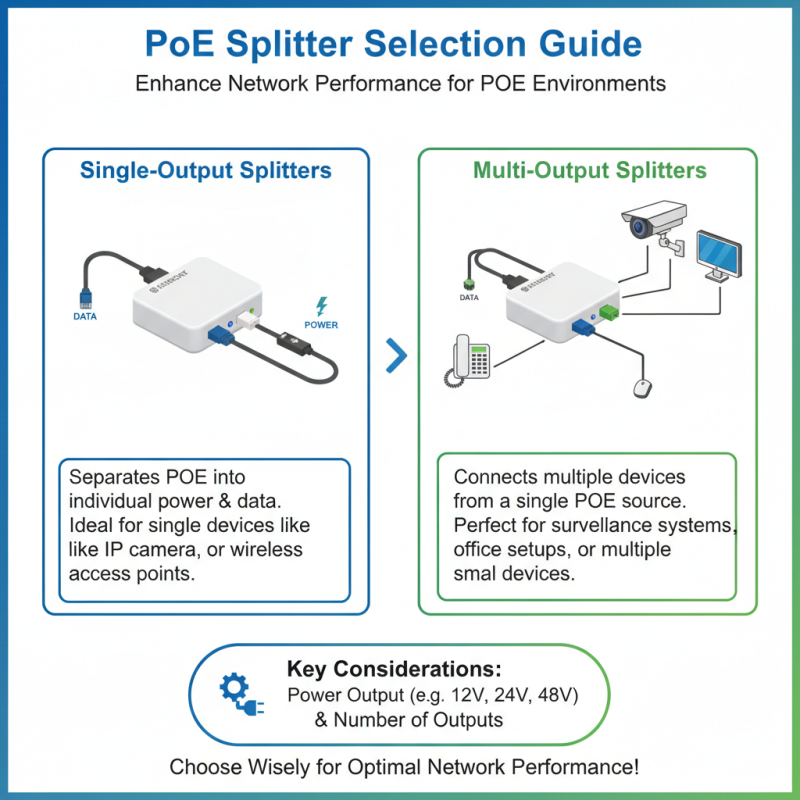
When it comes to enhancing network performance in environments requiring power over Ethernet (PoE), selecting the right PoE splitter is crucial. The market offers several types of PoE splitters designed to address various networking needs, which can be categorized based on power output and the number of outputs. Common configurations include single output splitters that separate PoE into distinct power and data lines, and multi-output splitters that allow multiple devices to be connected from a single PoE source, making them ideal for applications in surveillance systems or office settings.
Research from various industry reports highlights the growing demand for PoE technology, projecting that the PoE market is expected to grow significantly, reaching approximately $2.5 billion by 2027. This uptick in demand emphasizes the importance of robust PoE solutions. Splitters are typically available in categories such as passive and active splitters. Passive splitters do not negotiate power supply but offer a reliable means to power devices, while active splitters manage power more efficiently, ensuring that connected devices receive the necessary voltage. Their versatility makes splitters suitable for various setups, from simple home networks to complex enterprise environments, particularly where maintaining a clutter-free installation is a priority.
Key Features to Consider When Choosing a PoE Splitter
When selecting the best PoE splitter for your networking needs, it's crucial to focus on several key features that can significantly impact performance and compatibility. First, consider the power output specifications. Ensure that the splitter can deliver adequate power to your devices, typically measured in watts. The output voltage should match the requirements of your device; for instance, most common devices operate at 5V, 12V, or 24V. This alignment is essential to prevent damage and ensure optimal functionality.
Another important feature to evaluate is the data transfer capabilities of the PoE splitter. Look for models that support the appropriate network standards, such as 10/100/1000 Mbps, depending on your existing network infrastructure. Additionally, verify the range and compatibility with your current Ethernet setup to avoid connectivity issues. Moreover, having an integrated surge protection mechanism can safeguard your devices against power surges, enhancing durability and reliability in various environments. Balancing these features will help you choose the right PoE splitter tailored to your specific networking requirements.
How to Choose the Best Poe Splitter for Your Networking Needs - Key Features to Consider When Choosing a PoE Splitter
| Feature |
Description |
Importance |
Example Specifications |
| Power Output |
The amount of power the splitter can provide to connected devices. |
Essential for ensuring devices receive sufficient power. |
12W, 24W, or 48W options available. |
| Input Voltage |
The voltage required for the splitter to operate effectively. |
Critical for compatibility with PoE sources. |
IEEE 802.3af (48V), 802.3at (POE+). |
| Number of Ports |
The number of outputs available for connecting devices. |
Influences the number of devices you can connect. |
1, 2, or 4 ports. |
| Size and Form Factor |
The physical dimensions and design of the splitter. |
Affects installation space and setup. |
Compact design or rack-mountable. |
| Data Rate |
The maximum speed at which data can be transmitted through the splitter. |
Important for network performance and device compatibility. |
10/100Mbps, 1Gbps. |
| Safety Features |
Includes protections such as over-voltage, over-current, and short-circuit prevention. |
Crucial for protecting devices and maintaining system reliability. |
Surge protection, thermal protection. |
Assessing Power Requirements for Your Networking Devices
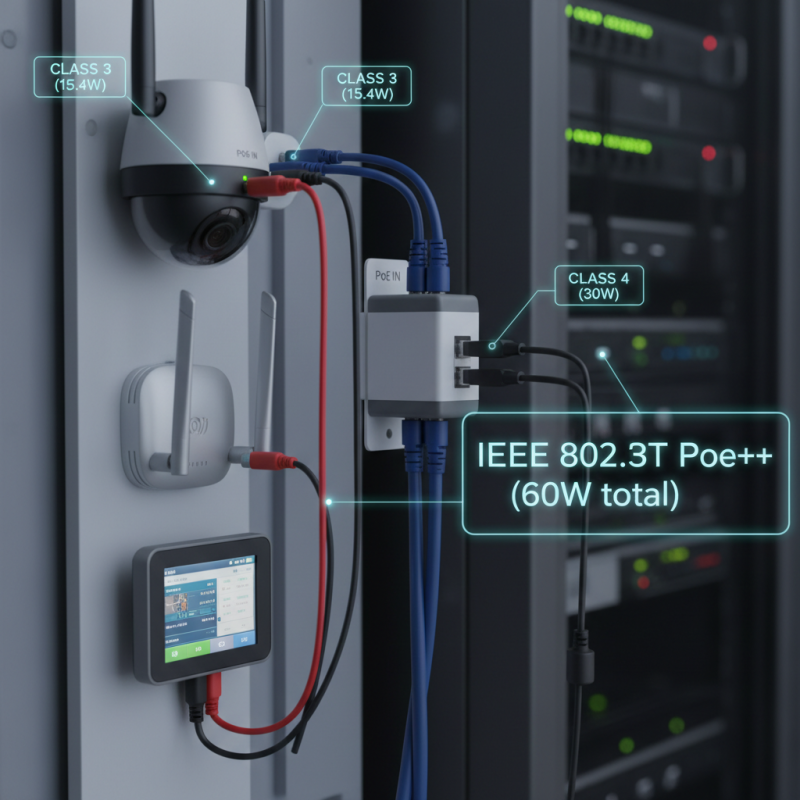
When selecting a Poe splitter for your networking needs, it's essential to first assess the power requirements of your networking devices. Power over Ethernet (PoE) technology allows network cables to carry electrical power alongside data, making it crucial to understand how much power each device will consume. According to the IEEE 802.3 standards, different classes of PoE can deliver varying amounts of power, ranging from 15.4 watts for PoE (Class 0) to 60 watts for PoE++ (Class 4). Understanding these classifications helps in determining which Poe splitter will effectively power your devices without overloading.
Furthermore, a 2022 report from the Power over Ethernet Market Research indicates that the demand for PoE devices is expected to grow significantly, with a compound annual growth rate (CAGR) of 15.5% through 2028. This growth is driven by the increasing need for advanced network setups in commercial buildings, surveillance systems, and smart home technologies. As a result, proper assessment of power requirements is crucial for ensuring that your Poe splitter is compatible with the cumulative power needs of your devices. Overestimating or underestimating these needs can lead to equipment failures or insufficient performance, making a thorough evaluation essential when choosing the right splitter for your setup.
Compatibility and Installation Tips for PoE Splitters
When selecting a Power over Ethernet (PoE) splitter, compatibility and installation are crucial factors that can significantly affect the performance of your network setup. First and foremost, it's essential to ensure that the PoE splitter you choose is compatible with both your power source and the devices you intend to connect.
Check the power requirements of your devices, as they can vary widely. Most PoE splitters support two standard output voltages: 5V and 12V, which cater to various devices such as IP cameras and VoIP phones. Additionally, confirm that the splitter can handle the power output of your existing PoE switch or injector, typically rated at either PoE (15.4W), PoE+ (30W), or PoE++ (60W).
Installation of a PoE splitter is generally straightforward, but requires careful attention to detail to avoid potential issues. Begin by placing the splitter close to the device that requires power, using a short Ethernet cable from your PoE source to minimize signal loss. Ensure that your regular power supply is ready to connect to the splitter’s output. Additionally, pay attention to the data and power pin assignment on the splitter to guarantee that connectivity aligns with your equipment's requirements. Taking these steps will help you set up a reliable and efficient network connection, allowing your devices to function optimally without interruption.