Why Choose Poe Switch for Your Network Needs?
In today's digital landscape, a reliable network infrastructure is crucial. Businesses are increasingly turning to PoE switches for their network needs. These devices simplify connectivity and power delivery, enabling organizations to streamline operations. A recent study highlighted that over 70% of enterprises prefer using PoE solutions for their efficiency and cost-effectiveness.
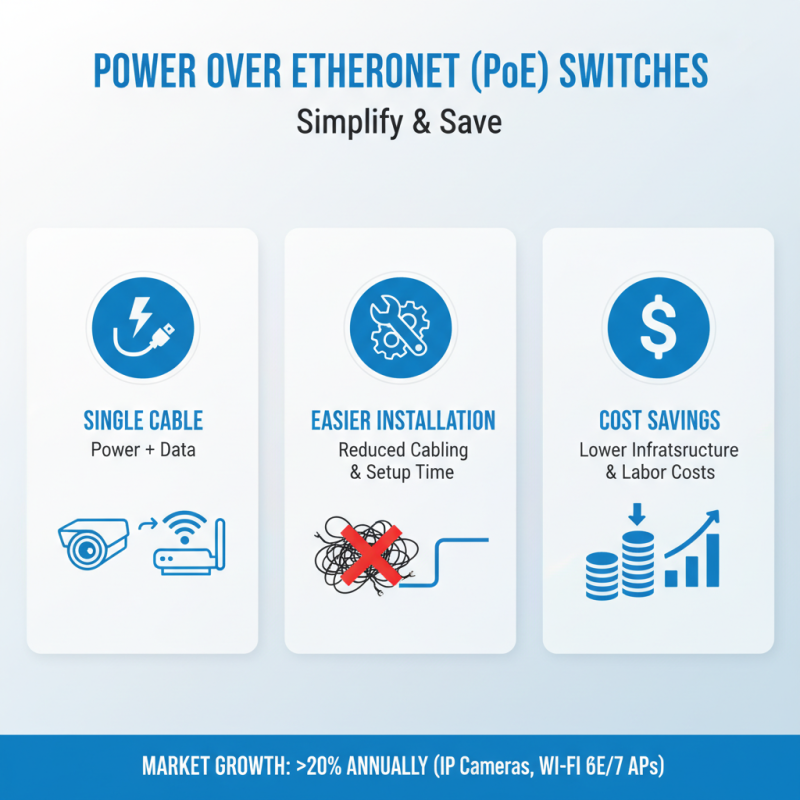
PoE switches can power multiple devices, such as IP cameras and wireless access points, through a single cable. This not only reduces installation costs but also minimizes clutter. According to industry insights, the global PoE switch market is expected to grow at a compound annual growth rate of 17% from 2021 to 2028. Such rapid growth reflects the increasing reliance on powered devices in various sectors.
However, it's essential to consider the right choice of PoE switch. Not every switch meets the demands of modern applications. Businesses must assess their unique requirements carefully. A rushed decision can lead to inefficiencies. Thus, reflecting on one’s specific network needs becomes imperative before investing in PoE infrastructure.

Benefits of Power over Ethernet (PoE) Technology
Power over Ethernet (PoE) technology provides an effective solution for powering devices through standard network cables. This efficiency is a game-changer for many businesses. For instance, it simplifies installation by eliminating the need for separate power sources. Imagine a security camera powered through the same cable that transmits data. This dual functionality cuts down on costs and installation time.
Moreover, PoE technology enhances safety and flexibility. Devices can be placed in locations where electrical outlets are absent or impractical. This flexibility is vital in settings like warehouses and outdoor areas. Consider how a wireless access point in a remote corner can provide connectivity without difficult wiring steps. However, it's essential to evaluate power requirements carefully. Misjudging these could lead to device failure or inadequate power supply.
Another point to reflect on is the scalability that PoE offers. Adding new devices becomes easier, supporting growth as needs change. Yet, if the infrastructure doesn't match the increasing demands, issues may arise. It’s crucial to plan and monitor network load. Finding the right balance may take time but results in a more sustainable network environment.
Why Choose Poe Switch for Your Network Needs? - Benefits of Power over Ethernet (PoE) Technology
| Feature |
Description |
Benefits |
| Cost Efficiency |
Consolidates power and data transmission over a single cable. |
Reduces costs for infrastructure and installation. |
| Flexibility |
Allows installation of devices in locations without power outlets. |
Enables easier placement of devices such as cameras and access points. |
| Ease of Installation |
Uses standard Ethernet cables (Cat5e/6). |
Streamlines network setup with fewer cables needed. |
| Scalability |
Easy to expand by adding new PoE devices without major changes. |
Adapts to growing network demands effectively. |
| Safety |
Built-in power management reduces risks from overload. |
Ensures a safer operation of network devices. |
Types of PoE Switches and Their Applications
Power over Ethernet (PoE) switches have become essential for modern networking needs. Different types of PoE switches serve various applications. Typically, you will find two main types: standard PoE switches and PoE+ switches. The standard PoE can deliver up to 15.4 watts per port. This is sufficient for devices like IP cameras and basic access points. PoE+ can provide up to 30 watts. This extra power is crucial for more demanding devices, such as PTZ cameras and advanced wireless access points.
When selecting a PoE switch, consider your devices' power requirements. If you plan to use multiple cameras, a higher capacity switch is wise. A low-capacity option might lead to issues later. You may find yourself constantly evaluating your infrastructure’s needs. Reflect on how future expansions could affect your setup. Additionally, ensure that the cable lengths are appropriate for the power delivery. Sometimes, longer cables can result in power loss. This is often overlooked, yet it can impact performance.
Each type of PoE switch has unique advantages. Balancing cost and functionality can be challenging. For instance, a budget-friendly option might lack essential features. Think carefully about your long-term goals. While initial savings can be appealing, the right equipment will pay off over time. Evaluate what works best for your specific situation. Being aware of these factors can greatly enhance your network's reliability and efficiency.
Types of PoE Switches and Their Applications
This chart compares the power output of different types of PoE switches, essential for meeting the diverse needs of modern network infrastructure.
How PoE Switches Simplify Network Cabling and Power Management
PoE (Power over Ethernet) switches are changing how we manage network cabling. These devices allow both data and power to be transmitted over a single cable. This simplification can reduce the clutter of wiring in any environment. A report from MarketsandMarkets estimates that the PoE switch market will reach nearly $1 billion by 2025. This growth shows just how appealing PoE technology is for modern networks.
Using PoE switches cuts down installation costs. Traditional setups require separate power cables, which can be time-consuming and expensive. With PoE, devices like IP cameras and VoIP phones can be powered directly through Ethernet cables. According to a study by Grand View Research, up to 90% of network professionals see enhanced efficiency with PoE systems. It’s important to consider that while the benefits are clear, some network designs may struggle with the limitations of power delivery.
However, it’s crucial to analyze your specific needs. Not all devices may be compatible with PoE technology. Additionally, cabling distance could be an issue beyond 100 meters. These challenges can make deployment tricky in large facilities. The ideal solution often requires a balance of technology and infrastructure. Overall, while PoE switches streamline network management, careful planning remains essential.
Comparing PoE Switches: Key Features to Consider
When considering a PoE switch for your network, several key features come into play. Power over Ethernet allows devices to receive power and data through the same cable. This is vital for simplifying installations and reducing costs. Industry reports indicate that the PoE market is expected to grow by over 20% annually. This growth is driven by increased demand for IP cameras and wireless access points.
One critical factor is the power budget. Most PoE switches offer various power levels, typically ranging from 15.4W to 60W per port. Understanding your device requirements is crucial. A mismatch can lead to underperformance or device failure. For example, a standard IP camera may require 15W, while advanced models need up to 30W. Choosing a switch that exceeds your needs ensures future flexibility.
Port count must also be a consideration. Options usually vary from 5 to over 48 ports. More ports provide greater scalability, but they can also lead to over-complicated setups. Having too many ports can create clutter, making troubleshooting difficult. Balancing between sufficient ports while maintaining simplicity is vital for efficient network management.
Future Trends in PoE Switch Technology for Networking Solutions
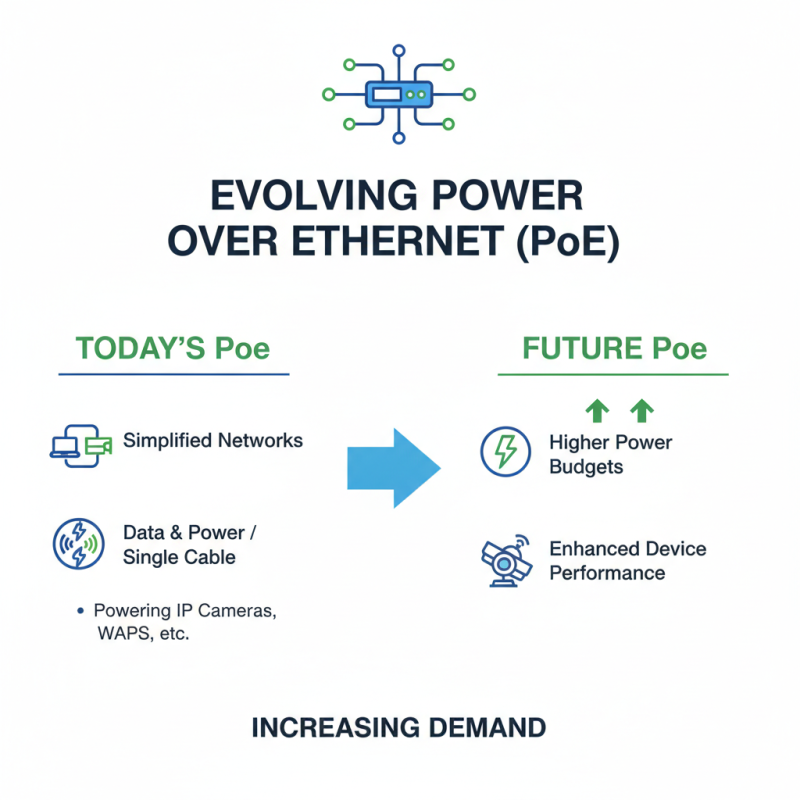
The demand for Power over Ethernet (PoE) switches is rapidly increasing. These devices simplify network setups by providing power and data through a single cable. However, as technology progresses, the trends in PoE switch capabilities evolve as well. Future models may support higher power budgets. This will enhance the performance of various devices like IP cameras and wireless access points.
Wireless technology is changing rapidly. PoE switches are adapting by offering scalable solutions. With the rise of smart cities and IoT devices, demands for robust connections are higher. A single switch may soon handle multiple connections efficiently. Users want fewer components to maintain. This means less clutter and simplified management.
Yet, challenges remain. Not all networks can handle the increased load. Previously installed infrastructure might not support newer technologies well. There is potential for bottlenecks, leading to frustration. It’s essential to assess current systems before upgrading. Balancing speed, power, and efficiency is key. By staying informed about these trends, users can make better decisions for their network needs.