How to Choose the Best Poe Injector for Your Needs?
When it comes to choosing the best Poe injector, expert insights are invaluable. John Smith, a recognized authority in the networking industry, once said, "Selecting the right Poe injector can redefine your network’s efficiency." This highlights the importance of making informed decisions.
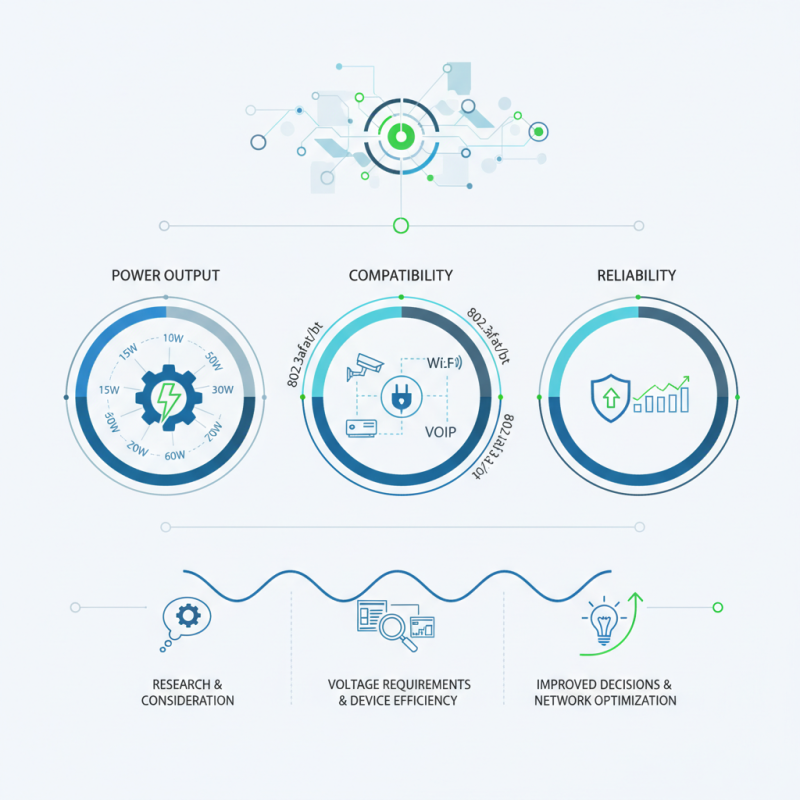
A Poe injector supplies power and data over Ethernet, which simplifies installations. Yet, with numerous options on the market, making the right choice requirements research and consideration. Features such as power output, compatibility, and reliability become critical. Each detail matters in ensuring devices function optimally without interruptions.
Understanding the specific needs of your setup can be challenging. Factors like voltage requirements and device efficiency should guide your selection. Not every Poe injector is equal, and sometimes the less popular brands might offer better solutions. Reflection on previous choices can lead to improved decisions moving forward, ensuring your network thrives.
Understanding Power over Ethernet (PoE) Basics
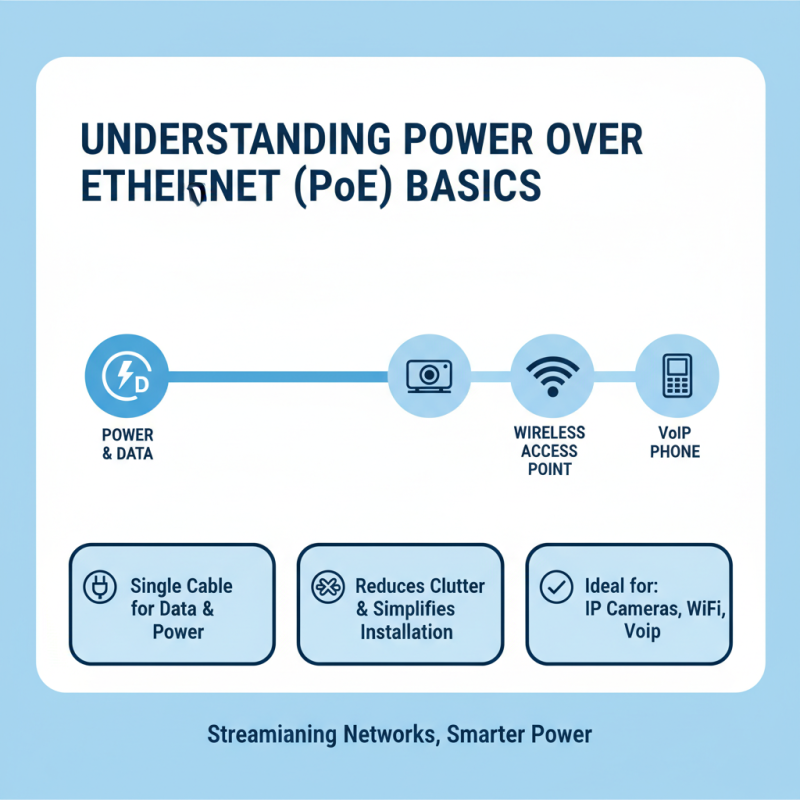
Power over Ethernet (PoE) technology simplifies network installations by delivering both data and power through a single Ethernet cable. This innovation is particularly beneficial for devices like IP cameras, wireless access points, and VoIP phones. By eliminating the need for separate power supplies, PoE reduces clutter and eases installation significantly.
However, understanding the basics of PoE is crucial before selecting a PoE injector. PoE operates under different standards, including IEEE 802.3af and IEEE 802.3at, which specify the amount of power supplied. Make sure your devices are compatible with the chosen standard. Consider the distance of cable runs too; longer distances can lead to power loss.
Moreover, not every PoE injector is alike. Some models may not provide sufficient power for high-demand devices. Think about the future of your network. Anticipating technology upgrades can help you choose a PoE injector that meets evolving needs. Failing to do so might result in having to replace equipment sooner than expected. Observing these details is key to ensuring a reliable PoE solution.
Types of PoE Injectors and Their Specifications
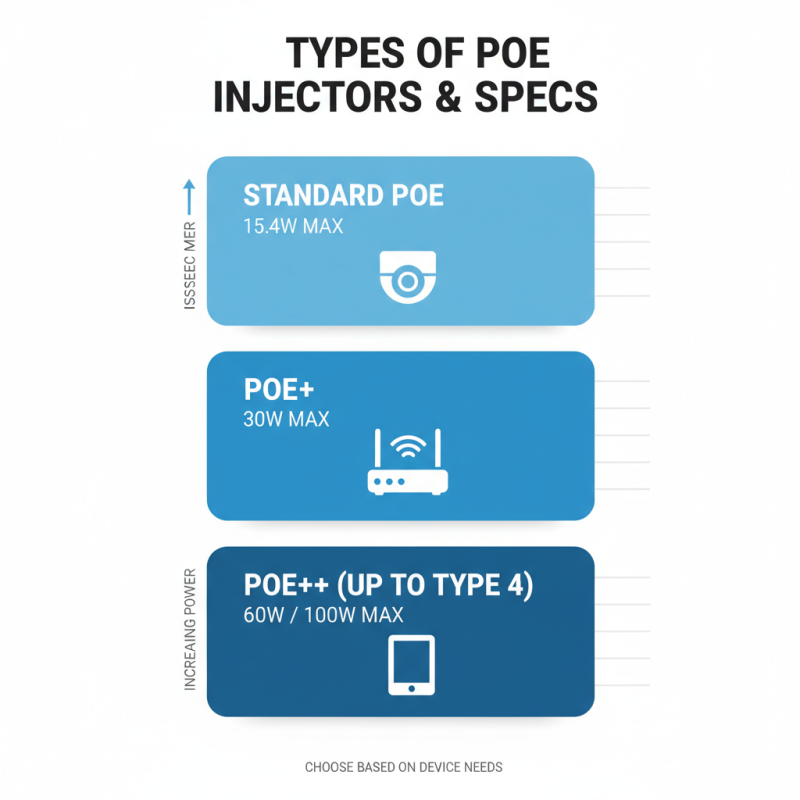
When choosing a PoE injector, understanding the types and specifications is crucial. There are several key categories of PoE injectors, each designed for specific needs. Standard injectors typically deliver up to 15.4W, while PoE+ models can supply up to 30W. For more demanding applications, PoE++ injectors provide up to 60W or even 100W. Evaluating the power requirements of your devices is essential.
Next, consider the output voltage of the injector. Most injectors operate at either 48V or 24V. Ensure that the voltage matches your devices. Additionally, pay attention to the connector types. Some injectors come with unique connectors, while others use the universal RJ45. Compatibility is key here.
Lastly, assess the injector's build quality and heat dissipation features. Some models may require more frequent cooling due to design flaws. It's beneficial to read user reviews to identify potential pitfalls in specific units. This way, you can avoid common issues that others have faced. Don't overlook these details. They can greatly impact your decision and the reliability of your setup.
Evaluating Power Requirements for Your Devices
When choosing a PoE injector, understanding the power requirements of your devices is crucial. Different devices consume varying amounts of power. For example, a simple IP camera may require 15 watts, while an access point could need up to 30 watts. Evaluating these needs helps prevent underpowering or overloading your systems.
Tips: Always check the specifications on your devices. Ensure that the injector can supply enough power. Consider future expansions, too. Will you add more devices? Anticipating growth can save you from additional costs later.
It's also essential to consider power dissipation. PoE injectors can lose some power as heat, especially if used in confined spaces. Assessing the environment where the injector will be placed can inform your choice. Sometimes, a higher wattage injector may be necessary to account for these losses.
Tips: Monitor the temperature of your injector. If it gets too hot, you may need to improve ventilation or choose a different model. This oversight can compromise performance in the long run. Always err on the side of caution when it comes to power safety.
How to Choose the Best Poe Injector for Your Needs? - Evaluating Power Requirements for Your Devices
| Device Type |
Power Consumption (W) |
Recommended Poe Injector Output (W) |
Poe Standard |
| IP Camera |
15 |
30 |
IEEE 802.3af |
| VoIP Phone |
5 |
15 |
IEEE 802.3af |
| Wireless Access Point |
10 |
30 |
IEEE 802.3af |
| Network Switch |
40 |
60 |
IEEE 802.3at |
| PTZ Camera |
25 |
60 |
IEEE 802.3at |
Factors to Consider When Choosing a PoE Injector
When selecting a PoE injector, consider several essential factors. Power output is crucial. Check the wattage to ensure it meets your device requirements. For example, IP cameras may need more power than basic Wi-Fi access points. So, assess your devices' power needs carefully.
The number of ports also matters. Single-port injectors work for individual devices, while multi-port options serve multiple devices efficiently. Look for injectors that can accommodate your current setup and future expansions. Additionally, compatibility with your cabling is vital. Ensure that the injector matches your network's infrastructure. Some injectors work better with certain types of cables. Moreover, think about the injector's efficiency. Cheaper models may save you money initially, but higher efficiency can lead to long-term energy savings.
Lastly, the injector's build quality and design should not be overlooked. Look for solid construction and good heat dissipation features. Cheap materials can lead to premature failures. Consider the installation process as well. Some injectors are easier to install than others. A complex setup can lead to frustration and wasted time. Choose wisely based on your skills and available tools.
Installation and Safety Considerations for PoE Injectors
When considering PoE (Power over Ethernet) injectors, installation is crucial. A safe and effective setup ensures reliable power delivery. Make sure to locate the injector close to your existing switch. A poorly chosen location can lead to poorly managed cables. Keep the area around the injector clear of obstructions to allow for proper airflow. Overheating can negatively affect performance.
Safety cannot be overlooked. Check that your injector complies with local electrical standards. Utilize cables rated for the required voltage. Using substandard cables can risk damage or failure. Always consider surge protection features. These can prevent damage from voltage spikes. Ensure your power source is stable to avoid interruptions.
Remember that not all networks are the same. Your unique requirements may lead to unexpected challenges. Test your setup regularly to catch issues early. Monitor power levels and data transmission. This can help identify potential problem areas. Adapting your approach is important as your network grows. Always be willing to learn and adjust your strategies.
PoE Injector Power Output Comparison