2026 How to Choose the Best IP67 Poe Splitter for Your Needs?
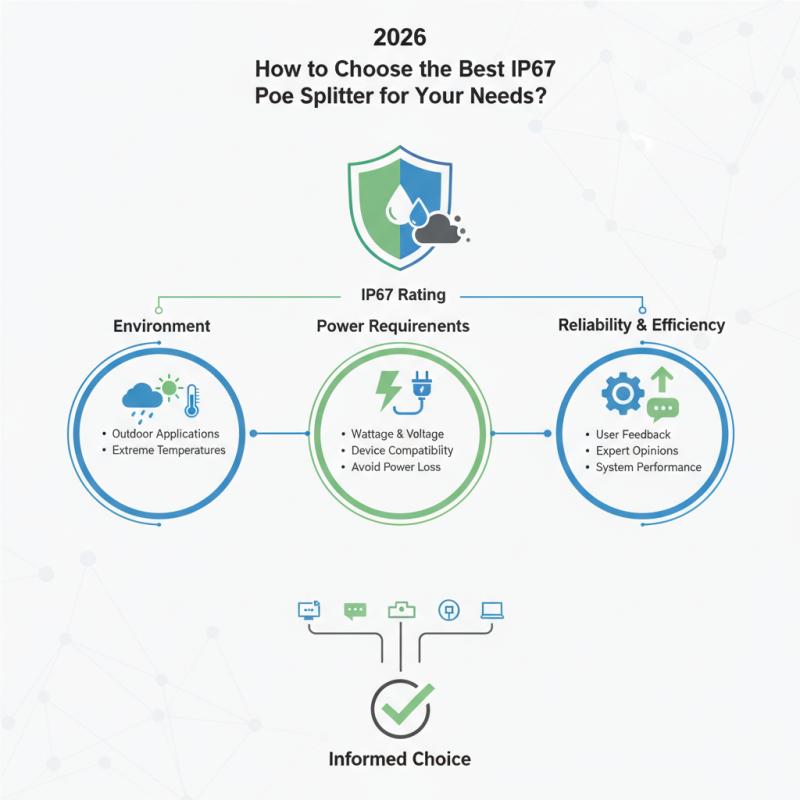
Choosing the right IP67 Poe Splitter can make a significant difference in your network setup. These devices are crucial for powering multiple devices while ensuring reliable data transmission. When searching for an IP67 Poe Splitter, it's essential to consider various factors that influence performance.
One key aspect is the environment. An IP67 rating indicates that the splitter is dust-tight and can withstand immersion in water. This makes it ideal for outdoor applications. However, not all splitters are created equal. Some may not handle extreme temperatures well.
Power requirements also play a role. Make sure to check the wattage and voltage needed by your devices. This ensures compatibility and optimal performance. Selecting a poorly rated splitter can lead to challenges, like power loss or equipment damage. Review user feedback and expert opinions to guide your decision-making. An informed choice in your IP67 Poe Splitter will enhance your system's reliability and efficiency.
Understanding IP67 Ratings and Its Importance in Poe Splitters
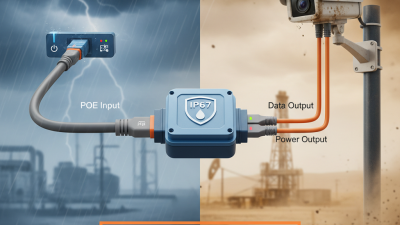
When exploring the selection of an IP67 PoE splitter, understanding the IP67 rating is crucial. The IP67 rating signifies that a device is both dust-tight and can withstand immersion in water for up to 30 minutes at depths of up to 1 meter. This robustness is essential for outdoor applications where exposure to dust and moisture is frequent. According to the International Electrotechnical Commission (IEC), devices with higher ingress protection (IP) ratings generally perform better in harsh environments.
The significance of IP67-rated PoE splitters becomes particularly evident in various industries. For instance, a report from Markets and Markets projected that the global PoE lighting market would reach $18.3 billion by 2025. This indicates a growing reliance on PoE technology in settings where environmental conditions cannot be controlled. Devices operating in such settings need to protect their internal components, and IP67 ratings play a vital role in ensuring durability and reliability.
While IP67 is impressive, not all applications require such stringent protection. It’s essential to evaluate the specific conditions where the splitter will be used. For instance, an indoor application may only require an IP20 rating. Balancing the cost and the necessary ratings is a decision that should be made carefully. Selecting a high-rating device for low-risk environments may lead to unnecessary expenses. Therefore, understanding your needs is critical in choosing the right PoE splitter.
Key Features to Look for in a Poe Splitter
When selecting an IP67 PoE splitter, consider essential features that suit your project needs. One critical aspect is input power capability. Ensure it meets your device’s voltage requirements. Many PoE splitters offer options of 5V, 12V, or 24V outputs. Analyze your device to determine the best fit. Compatibility plays a significant role too; not every splitter works seamlessly with every device.
Another feature to pay attention to is data transmission speed. Look for splitters that support gigabit Ethernet. This is vital if your application requires high-speed data transfer. Check the splitter's specifications to avoid potential bottlenecks. Reliability is crucial, especially in harsh environments. An IP67 rating guarantees protection against dust and water, enhancing durability.
Lastly, consider the total power budget. Calculate the power consumption of all connected devices. It is common for users to overlook power requirements. Some may end up with a splitter that cannot deliver enough power. This can lead to frustrating situations. Carefully evaluating power needs upfront can save time and resources. Make a well-informed decision.
Evaluating Your Power and Data Needs for Optimal Performance
When selecting the right IP67 PoE splitter, understanding your power and data needs is vital. Start by assessing the power requirements of your devices. Each device may have different voltage and wattage needs. This evaluation ensures you choose a splitter that provides sufficient power without overloading your devices.
Next, consider the data transmission capabilities. Different environments might affect signal strength. Outdoor settings may introduce interference. It's crucial to evaluate whether the splitter supports the data rates required by your devices. Inadequate data transmission can lead to performance issues, which can be frustrating.
Lastly, think about layout and installation. The physical placement of the splitter can impact both power and data connectivity. An ideal location maximizes efficiency, but unforeseen obstacles might arise. Sometimes, what seems ideal can turn out to be a challenge later. Assessing these details can lead to better performance and reliability.
Power and Data Needs for IP67 Poe Splitters
Comparing Different Brands and Models of IP67 Poe Splitters
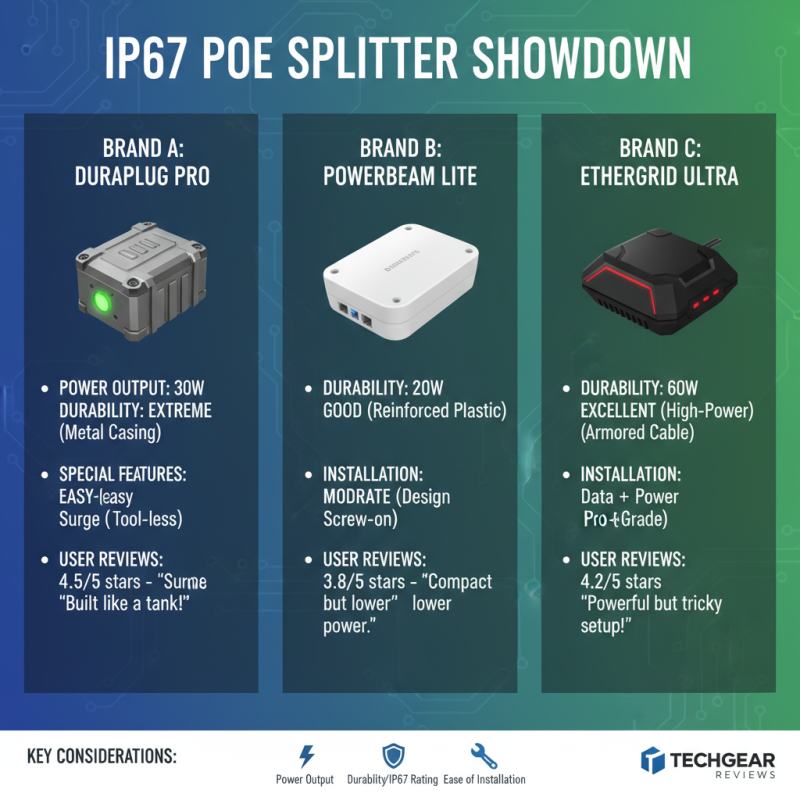
When it comes to choosing the right IP67 PoE splitter, comparing different brands and models is essential. These devices vary greatly in design, features, and performance. Some models provide higher power output, while others may offer better durability or ease of installation. Researching user reviews can help you understand real-life performance.
Tips: Look for splitters with metal casings. They are often more robust and can handle harsher environments. Consider the cable lengths, as this can affect installation options.
Another factor is heat dissipation. Some splitters do a better job than others. If you're in a hot climate, pay attention to this detail. A poorly designed unit may overheat, leading to failure sooner than expected.
Tips: Always check the specifications. Ensure the splitter meets your voltage and current needs. Ask for recommendations from professionals if you're unsure. It's okay to feel overwhelmed by the options available. Engaging with experts can provide clarity.
Installation Considerations for IP67 Poe Splitters in Various Environments
When considering the installation of an IP67 PoE splitter,
the environment plays a critical role. Many facilities use these splitters outdoors, where moisture and dust are prevalent.
According to a recent industry report, over 70% of installations for devices requiring PoE happen in outdoor or harsh settings.
Such environments demand high reliability and robustness from equipment used.
Temperature variations can also affect performance. The operating temperature range for many PoE splitters is typically between
-40°C and 70°C. If a device is installed in an area where
temperatures frequently approach these extremes, efficiency can drop. The IP67 rating promises dust-tight protection, but recurring exposure
to water-driven contaminants can lead to long-term issues if not properly addressed.
Users should also consider mounting options for ease of access and maintenance. Equipment installed in hard-to-reach locations may lead
to operational challenges. The cost of regular maintenance can impact budget allocations. A report from the
International Electrotechnical Commission emphasizes ease of access as critical to prolonged usability.
Without this consideration, even the best equipment may falter over time.