What is an Industrial Managed Switch and How Does it Work?
In today's industrial landscape, connectivity and reliability are paramount. Industrial Managed Switches play a key role in ensuring seamless communication among devices. According to a recent report by MarketsandMarkets, the industrial networking market is projected to reach $109.2 billion by 2025, with managed switches being a significant contributor.
These devices offer features like port management, traffic prioritization, and enhanced security. Industries such as manufacturing and transportation heavily depend on these technologies. Research indicates that about 75% of enterprises experience improved network performance when using Industrial Managed Switches. However, organizations must remain vigilant about their configurations and management practices.
While these switches enhance operational efficiency, there can be challenges. Issues like misconfigurations can lead to downtime. Reflecting on past implementations shows that a lack of training can undermine their benefits. Continuous learning and adaptation are crucial for maintaining optimal performance. Ultimately, the adoption of Industrial Managed Switches offers substantial advantages, yet careful consideration is needed for sustainable success.
What Defines an Industrial Managed Switch in Network Infrastructure?
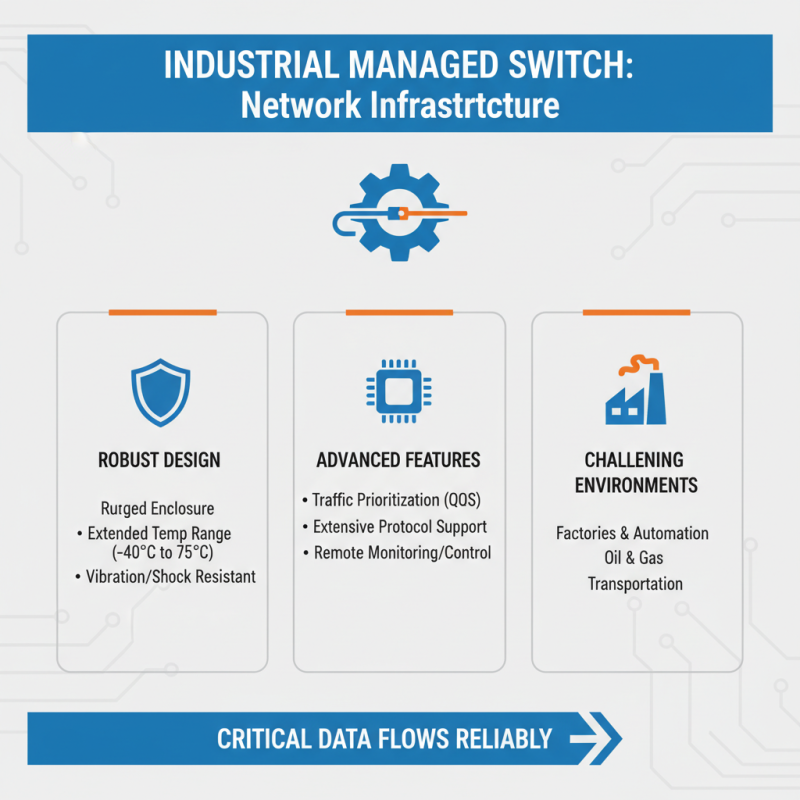
An industrial managed switch is a crucial element in modern network infrastructure. Its primary function is to facilitate reliable communication between devices in challenging environments. These switches differ from standard models due to their robust construction, operating range, and advanced management features. They often support extensive protocols and can prioritize traffic, ensuring critical data flows efficiently.
What really defines an industrial managed switch is its versatility. It operates seamlessly in harsh conditions, such as extreme temperatures and vibrations. This makes them ideal for industries like manufacturing and energy. Despite their advantages, some users may overlook the importance of proper configuration. Misconfigurations can lead to network disruptions. Understanding the specific needs of your network is vital to fully leverage the switch's capabilities.
Furthermore, industrial managed switches often include advanced security features. They protect sensitive data from external threats. However, not all switches implement security uniformly. It's essential to evaluate and ensure the appropriate measures are in place. Proper ongoing training for network personnel is necessary. Regular audits can prevent vulnerabilities, emphasizing the need for diligence in network management practices.
Key Features of Industrial Managed Switches for Robust Connectivity
Industrial managed switches play a crucial role in ensuring robust connectivity within complex network environments. These devices offer advanced capabilities that enhance network reliability and performance. For instance, they enable features like VLAN support, QoS, and port mirroring, which help manage traffic more effectively. According to recent industry reports, the global market for industrial networking equipment is expected to reach $12 billion by 2025, highlighting the growing demand for reliable connectivity solutions.
One key feature of industrial managed switches is their ability to support redundant network connections. This redundancy minimizes downtime, a critical factor in sectors like manufacturing and transportation. Research shows that even a minute of downtime can cost companies thousands of dollars. Additionally, these switches often come equipped with advanced security features that protect against unauthorized access. A survey indicated that over 70% of industrial organizations prioritize security in their network planning.
Real-time monitoring and control are also essential aspects of industrial managed switches. They can provide instant notifications about network issues, allowing for rapid response. However, the complexity of managing these systems can pose challenges. Companies often find it difficult to balance full network visibility with operational efficiency. Continuous training and adaptation are necessary to fully leverage the features of these advanced networking devices.
What is an Industrial Managed Switch and How Does it Work? - Key Features of Industrial Managed Switches for Robust Connectivity
| Feature |
Description |
Benefits |
| Port Density |
Typically ranges from 8 to 48 ports, providing flexibility for various network sizes. |
Scalable solutions for growing network demands. |
| Redundancy Features |
Includes redundant power inputs, RSTP/MSTP for network resilience. |
Minimizes downtime and enhances network reliability. |
| Management Protocols |
Supports SNMP, RMON, and CLI for user-friendly management. |
Easier monitoring and configuration of network devices. |
| Environmental Protection |
Designed to operate in extreme temperatures, vibrations, and humidity. |
Ideal for industrial applications where conditions are harsh. |
| Quality of Service (QoS) |
Prioritizes traffic flow and ensures bandwidth management. |
Improves performance for critical applications and services. |
| Security Features |
Includes VLANs, port security, and access control lists (ACLs). |
Enhances network security and protects against unauthorized access. |
| Power over Ethernet (PoE) |
Provides power to connected devices, such as IP cameras and phones. |
Reduces the need for additional electrical outlets, simplifying installation. |
Understanding VLAN and QoS in Industrial Managed Switch Functionality
Industrial managed switches play a critical role in network management, particularly regarding VLAN and QoS functionalities. VLAN, or Virtual Local Area Network, enables the segmentation of network traffic. This allows for enhanced security and improves overall network efficiency. According to a report by MarketsandMarkets, the industrial networking market is expected to grow at a CAGR of 7.5% from 2021 to 2026. As demand increases, understanding these functionalities becomes paramount.
Quality of Service (QoS) ensures that critical data packets receive priority over less important traffic. This is essential in industrial environments where real-time data transmission is crucial. For instance, a delay in data from a sensor can lead to equipment failure and costly downtime. Reports indicate that implementing QoS can reduce network latency by up to 30%. While implementing these technologies is beneficial, many organizations struggle with configuration complexities.
Understanding VLAN and QoS is vital but requires expertise. Misconfigurations can lead to network bottlenecks or vulnerabilities. Data from the International Society of Automation suggests that 25% of industrial networks experience downtime due to poor network management. Companies must continually review and adapt their strategies to effectively utilize VLAN and QoS in industrial managed switches.
The Role of Redundancy and Reliability in Industrial Managed Switches
In industrial settings, redundancy and reliability are crucial for network stability. Industrial Managed Switches are designed to maintain uninterrupted communication in harsh environments. According to a report by MarketsandMarkets, the global industrial switch market is expected to grow from $2.26 billion in 2020 to $4.10 billion by 2025. This growth is driven by the increasing need for reliable data transfer in sectors like manufacturing and energy.
Redundancy features, such as ring topology, help mitigate network failures. If one link fails, data can reroute through alternative paths. A study by the International Society of Automation suggests that downtime can cost industries up to $500,000 an hour. Therefore, a reliable industrial switch is not just an asset; it is a necessity.
However, the implementation of these switches is not without challenges. Users must configure the settings correctly to ensure redundancy works as intended. Misconfigurations can lead to network issues, undermining the system's designed reliability. As industries become more interconnected, pushing the limits of technology is essential. Balancing advanced features with dependable performance remains an area ripe for exploration.
Applications of Industrial Managed Switches in Critical Industries and Data Centers
Industrial managed switches play a crucial role in various critical industries and data centers. Their primary function is to manage network traffic efficiently. This is essential in environments like manufacturing, energy, and healthcare, where downtime can have serious consequences. Managed switches offer features like VLAN support and Quality of Service (QoS) that optimize data flow, reduce latency, and enhance reliability.
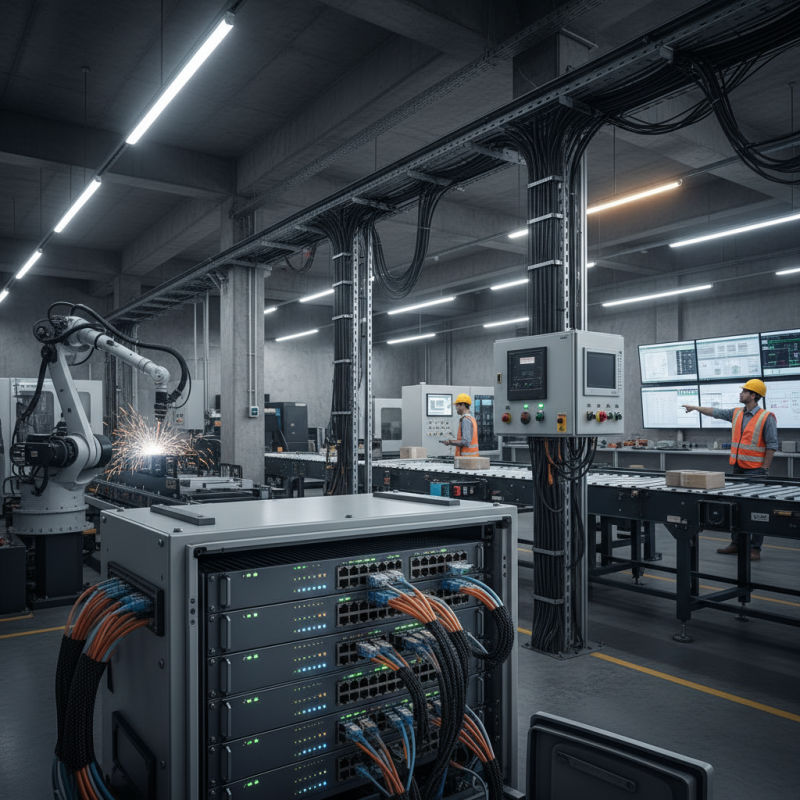
In manufacturing settings, industrial managed switches connect sensors, machines, and control systems. They ensure real-time communication between devices, which is vital for automation and monitoring. In data centers, these switches manage large volumes of data and support redundancy. This helps maintain uptime and secure data integrity. However, careful configuration is necessary. Misconfigurations can lead to network vulnerabilities and performance issues.
Moreover, industries depend heavily on information security. Managed switches allow for better monitoring and access control. They enable IT teams to implement security protocols effectively, but the complexity might introduce errors. As industries advance, ongoing training for staff on network management is vital. Understanding the full capabilities of managed switches ensures they are used to their maximum potential, while also mitigating risks.