Essential Tips for Choosing the Best Poe Switch for Your Needs?
Choosing the right Poe switch for your needs can significantly impact your network performance. The demand for innovative networking solutions is growing. A report by Market Research Future predicts that the global Poe switch market will reach USD 7.9 billion by 2027, growing at a CAGR of 11.1%. This surge emphasizes the importance of making informed decisions.
Renowned industry expert, John Smith, who has over 15 years of experience in network solutions, states, "Selecting the right Poe switch can optimize both cost and efficiency." His insights reflect the necessity for businesses to evaluate their needs meticulously. Factors such as power output, number of ports, and management features should influence your choice of Poe switch.
Yet, many enterprises still make hasty decisions, often leading to suboptimal performance. Evaluating power needs and compatibility with existing equipment is crucial. Take your time to assess all options thoroughly. The right Poe switch can enhance connectivity and operational efficiency, while the wrong one could lead to frustration and wasted resources.
Understanding Power over Ethernet (PoE) Technology Basics
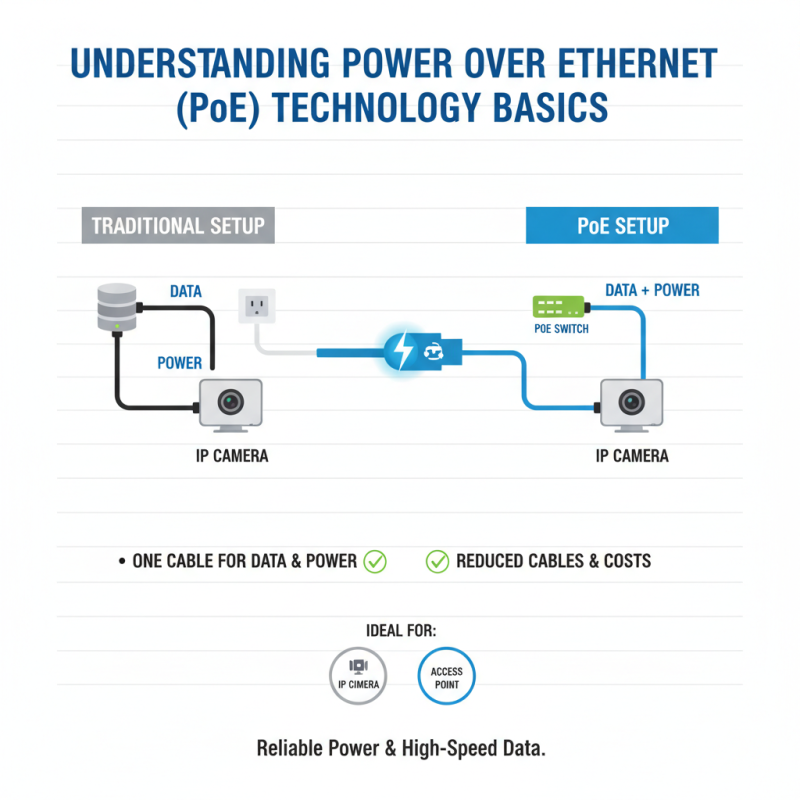
Power over Ethernet (PoE) technology simplifies network installations. It allows data and power to run over a single cable. This means fewer cables and lower installation costs. PoE is popular for devices like IP cameras and access points. It provides a reliable power source alongside high-speed data.
Understanding PoE requirements is vital. Not all cables are created equal. Ensure you use the right Ethernet cable. Category 5e or higher is recommended for optimal performance. Consider the power requirements of your devices. Some devices may need more power to function correctly. Overloading a PoE switch can lead to failure.
Thermal management is another important aspect. PoE switches can generate heat, which impacts performance. Adequate ventilation is essential for longevity. A poorly ventilated space can cause overheating and shutdowns. Evaluate your installation environment before choosing a switch. This helps in creating a reliable network setup. Understanding these basics can lead to better decision-making in your installations.
Identifying Your Specific Network Requirements for PoE Switches
When choosing a PoE switch, understanding your network requirements is essential. Begin by assessing the number of devices needing power and connectivity. Devices like IP cameras, VoIP phones, and wireless access points all require different levels of power. Consider their power demands carefully. This helps you determine the total wattage your switch must support.
Next, think about the data transmission speed. A busy network with many devices will need a higher bandwidth. Gigabit speeds are often necessary for seamless operation, particularly in larger setups. Additionally, check the distance your devices will be from the switch. PoE can effectively power devices up to 100 meters away. If your network extends beyond this, you might need a different solution.
Lastly, plan for future growth. Pick a switch that allows for expansion without needing an immediate upgrade. A good practice is to have a mix of PoE and non-PoE ports. This flexibility can help you adapt to changing needs. Regularly reassess these factors as your network evolves. This approach ensures your setup remains efficient and effective.
Essential Tips for Choosing the Best Poe Switch for Your Needs
| Feature |
Description |
Importance |
Example Use Case |
| Port Count |
Number of PoE ports available on the switch. |
Critical for ensuring all devices can be connected. |
Connecting multiple IP cameras in an office. |
| Power Budget |
Total wattage that can be supplied to PoE devices. |
Essential for compatibility with power-hungry devices. |
Using multiple VoIP phones and wireless access points. |
| Switch Type |
Managed vs. Unmanaged switches. |
Managed switches offer advanced features for complex networks. |
Skillful network management for larger organizations. |
| PoE Standard |
IEEE 802.3af, 802.3at, 802.3bt. |
Higher standards can supply more power. |
Supplying power to high-resolution cameras requiring more wattage. |
| Budget |
Available funds for purchasing the switch. |
Finding a balance between cost and features is key. |
Small business wanting effective solutions without overspending. |
Evaluating Key Features of PoE Switches: Power Budget and Ports
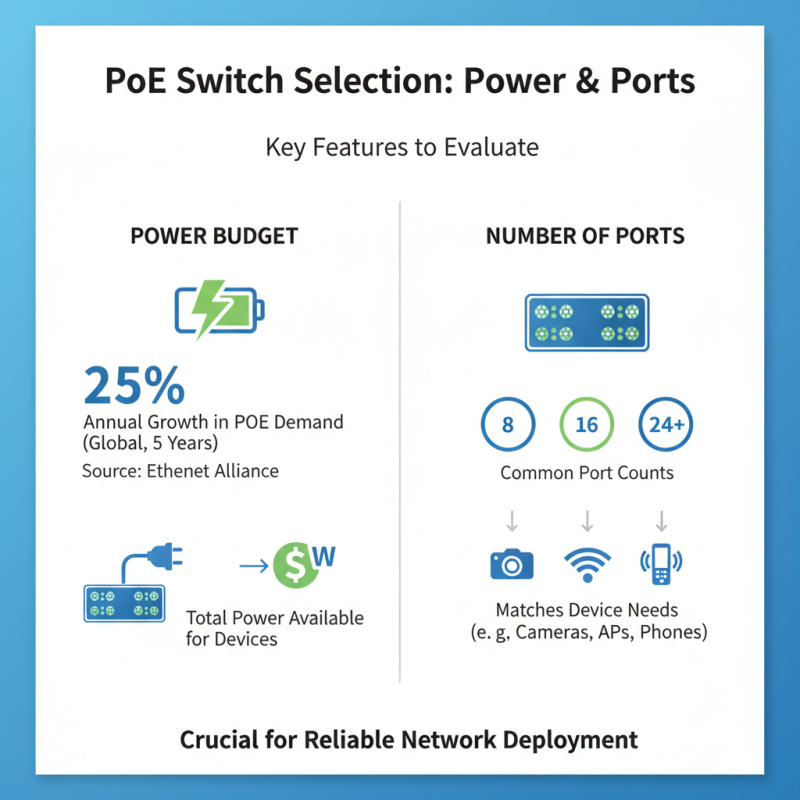
When selecting a Power over Ethernet (PoE) switch, evaluating the power budget is critical. A PoE switch's power budget indicates how much power it can deliver to connected devices. According to the Ethernet Alliance, the global demand for PoE technology is expected to grow by 25% annually over the next five years. This growth highlights the increasing need for adequate power management.
Consider the number of devices you aim to connect. Each device consumes power based on its requirements. A typical IP camera may require 15 watts, while a VoIP phone may use around 5 watts. If your switch has 10 ports with a total power budget of 100 watts, you must calculate the distribution. Balancing power allocation ensures each device gets enough energy to function properly. A shortage can lead to device failures, which is often overlooked.
Port count is another vital aspect. A switch with additional ports offers flexibility for network expansion. If you don't account for future growth, you may quickly outgrow your current switch. On the other hand, investing in a switch with unused ports may initially seem wasteful. It’s a fine balance. An analysis from IDC suggests that organizations fail to properly anticipate IoT growth, often underestimating the number of devices they'll need to support over time.
Considering Managed vs. Unmanaged PoE Switches for Flexibility
When choosing a PoE switch, deciding between managed and unmanaged options is critical. Managed switches offer enhanced flexibility. They allow more control over your network. For instance, you can prioritize traffic based on your needs. This is crucial for heavy data flows or critical applications.
Unmanaged switches, on the other hand, are straightforward. They provide plug-and-play functionality. Ideal for simpler setups, they can be less costly. However, they lack the configuration options that managed switches offer. If you're operating in a dynamic environment, this can pose limits.
Consider your current and future needs. Are you running a small business or managing a large network? Tips to keep in mind include analyzing traffic patterns and growth potential. You may also want to evaluate your security requirements. Ensure you're equipped to adapt if your network grows or changes. This reflection is vital. Choosing the right switch can significantly impact your overall network performance and flexibility.
Assessing Cost and Brand Reliability in PoE Switch Purchases
When considering a Power over Ethernet (PoE) switch, cost and brand reliability are crucial factors. A 2023 industry report indicates that quality and performance often correlate with price. Cheaper models may save you money upfront but can result in higher maintenance costs. Select a switch that balances initial expenditure with long-term reliability.
Brand reputation plays a significant role in the decision-making process. A survey by Network Research Group found that 78% of IT professionals prioritize established brands for network equipment. These brands typically offer robust warranties and long-term support, which can mitigate unforeseen issues. However, trust in lesser-known brands may also yield savings if researched carefully.
Think about your specific needs as well. Does your network require high data transfer rates, or are energy efficiency and low heat output more critical? These distinctions matter. Track records show that some brands perform better in certain environments. Analyze user reviews and independent tests. Review how different brands handle customer service inquiries. Balancing cost, reliability, and specific application requirements is essential for making an informed choice.
Comparison of Features in Different PoE Switches