Top 10 Benefits of 2.5G Switch for Global Buyers?
In today's fast-paced digital world, the demand for efficient networking solutions is ever-increasing. The 2.5G Switch emerges as a transformative technology, bridging the gap between traditional and cutting-edge networking. Renowned expert in networking technology, Dr. Alex Johnson, emphasizes its significance, stating, "The 2.5G Switch effortlessly enhances bandwidth without the need for extensive upgrades."
This evolution not only offers higher data transfer rates but also addresses various industry challenges. Organizations can lean on 2.5G Switches to facilitate smoother communication, reduce latency, and improve overall productivity. As the landscape shifts, many global buyers are eager to explore these advantages for their operations.
Yet, as with any new technology, some uncertainties exist. Potential buyers must weigh the benefits against their existing infrastructure and future needs. Careful consideration will ensure that adopting a 2.5G Switch aligns with their strategic objectives and investment goals. Ultimately, the exploration of these switches sheds light on a promising shift in networking efficiency.

Advantages of 2.5G Switch Technology for International Customers
The advantages of 2.5G switch technology are becoming increasingly relevant for international customers. This technology offers a significant upgrade from previous generations. It allows for higher data rates, making it suitable for bandwidth-hungry applications. Users enjoy faster internet speeds without needing to invest in costly infrastructure upgrades. Connectivity is more reliable, reducing latency and improving overall user experience.
Moreover, energy efficiency is a key benefit. The 2.5G switch technology consumes less power while delivering high performance. This can lead to reduced operating costs for businesses globally. The switch also supports a variety of applications, from video conferencing to cloud computing. Flexibility is essential in meeting the diverse needs of international buyers.
However, it's crucial to be cautious about potential limitations. Not all existing networks may support 2.5G switches seamlessly. Compatibility issues can arise, requiring further assessment before upgrading. Additionally, while maintenance costs may decrease, initial investments can be substantial. International customers must weigh these factors carefully to maximize their technology investments.
Top 10 Benefits of 2.5G Switch for Global Buyers
Enhanced Network Speed with 2.5G Switching Solutions
In today's fast-paced digital landscape, enhanced network speed is crucial. Businesses are experiencing a surge in data demands. As a solution, 2.5G switching technology is gaining traction among global buyers. This new standard promises faster data transfer, allowing businesses to optimize their operations.
2.5G switches can significantly improve internet speeds, empowering organizations to handle large applications seamlessly. Instead of bottlenecks, users experience smooth connections. High-definition video conferencing becomes seamless, while file uploads and downloads accelerate. As companies grow, they can scale their networks without worrying about congestion. Yet, the adoption of new technology can be challenging. Companies must ensure their infrastructure can support these advancements.
Another benefit lies in reduced latency. Quick responses are vital in competitive markets. A delay can mean lost opportunities. Moreover, transitioning to 2.5G can be easier than anticipated. Older cabling may not require a complete overhaul. However, it's essential to assess hardware compatibility before making the switch. Finding the right balance between speed and reliability is key to success in the digital age.
Cost-Effectiveness of Upgrading to 2.5G Switches
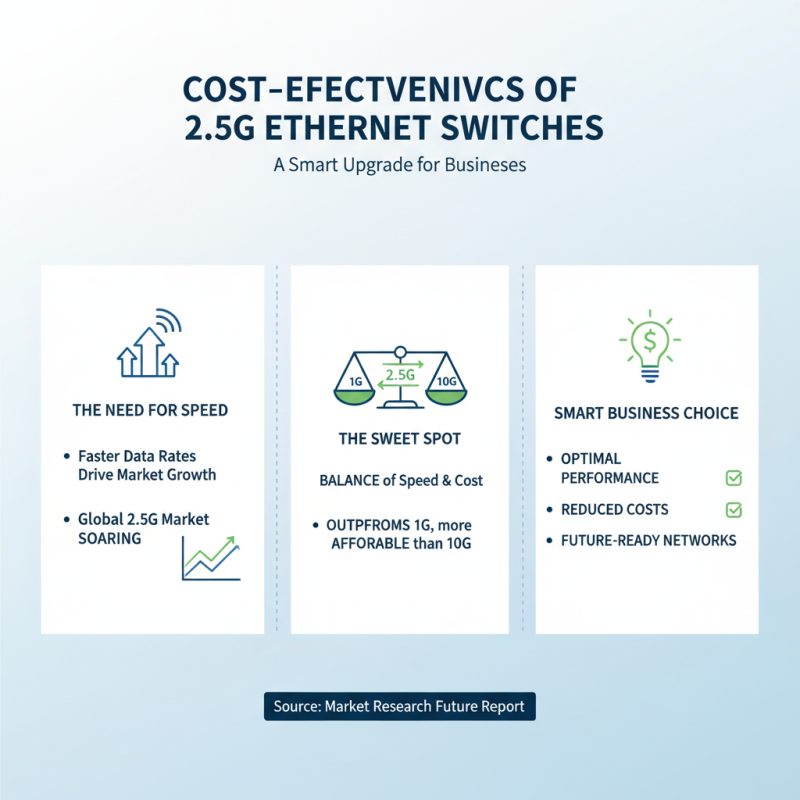
The cost-effectiveness of upgrading to 2.5G switches is notable. According to a report by Market Research Future, the global 2.5G Ethernet switch market is projected to grow significantly, driven by the need for faster data rates. These switches offer a balance between 1G and 10G, making them a smart choice for many businesses.
Many organizations face tight budgets. Transitioning to 2.5G switches can yield substantial savings on infrastructure investments. A study by IDC indicates that businesses can reduce operational costs by up to 30% with upgraded network equipment. This upgrade could also lower energy consumption, which is a growing concern.
Despite these benefits, some hesitate. Initial costs can be daunting. Organizations must consider their current infrastructure and future needs. A clear assessment is vital. The right upgrade can enhance network performance while maintaining financial health, aligning with long-term growth strategies. It's crucial to weigh immediate expenses against potential future gains.
Improved Scalability and Flexibility of 2.5G Networking
The rise of 2.5G networking brings significant enhancements in scalability and flexibility, crucial for global buyers. According to industry reports, 2.5G technology supports higher speeds up to 2.5 Gbps. This leap effectively bridges slower legacy systems and advanced 10G networks.
Flexibility plays a vital role in modern networking. With a 2.5G switch, businesses can adapt their bandwidth needs more efficiently. This adaptability is essential for organizations facing fluctuating demands. Research indicates that companies utilizing advanced networking technologies can increase their operational efficiency by 30%. Many firms still depend on outdated infrastructure, creating bottlenecks. Thus, upgrading to 2.5G can eliminate these performance issues.
Improved scalability means that as network demands grow, 2.5G can accommodate more devices without compromising performance. Studies reveal that 82% of businesses experience growth challenges due to insufficient network capacity. The 2.5G option allows seamless integration of more devices, ensuring resources are effectively utilized. However, decision-makers should consider the costs and implementation challenges. Balancing these factors is vital for a successful transition.
Top 10 Benefits of 2.5G Switch for Global Buyers
| Benefit |
Description |
Impact |
| Increased Bandwidth |
Supports data rates up to 2.5Gbps, allowing for faster data transmission. |
Improves overall network performance and user experience. |
| Enhanced Performance |
Offers low latency and high efficiency for applications. |
Supports real-time applications effectively. |
| Improved Scalability |
Easily scalable to accommodate growing network demands. |
Future-proofs network investments. |
| Cost Efficiency |
Reduces operational costs with affordable hardware and lower maintenance needs. |
Maximizes ROI for network investments. |
| Flexibility |
Supports multiple network architectures, including traditional and modern setups. |
Adapts to different business needs. |
| Robust Security |
Includes advanced security features to protect data. |
Ensures data integrity and privacy. |
| Enhanced QoS |
Provides Quality of Service (QoS) for prioritizing critical applications. |
Improves reliability of voice and video communications. |
| Interoperability |
Easily integrates with existing network equipment. |
Minimizes disruption during upgrades. |
| Remote Management |
Allows for remote configuration and monitoring of the network. |
Reduces the need for physical on-site maintenance. |
| Support for IoT |
Facilitates connectivity for a growing number of IoT devices. |
Enables smart environments and automation. |
Technical Support and Compatibility with Existing Systems
Switching to a 2.5G network brings several advantages, especially regarding technical support and compatibility. Many existing systems can integrate seamlessly with 2.5G switches. This feature ensures businesses can upgrade their networks without overhauling their current infrastructure.
Compatibility is essential. Companies can continue using their existing cabling and devices, which lowers costs. Upgrading components can happen gradually, thus minimizing disruptions. It provides a sense of security and reliability, knowing that the transition process will be manageable.
**Tip:** Evaluate your current network setup before upgrading. Identify components that are compatible to maximize efficiency.
However, using 2.5G technology isn't without challenges. Organizations may face integration issues with legacy systems. It is crucial to assess technical gaps. Skipping this step may lead to more complex problems down the line.
**Tip:** Consult with technical experts. Their insights can save time and resources while ensuring smooth transitions.
A well-planned migration strategy is vital. Consider phased rollouts to address potential hiccups. This approach allows for troubleshooting and adjustment before full implementation.