Top 5 L2 Managed Poe Switches for Your Network Needs?
In today's rapidly evolving technological landscape, the demand for efficient network solutions is at an all-time high. According to a recent industry report by Cisco, the global market for managed switches is projected to grow by 10% annually through 2026. This growth underscores the importance of choosing the right network devices, particularly the L2 Managed PoE Switch, a crucial component for powering devices like IP cameras and VoIP phones.
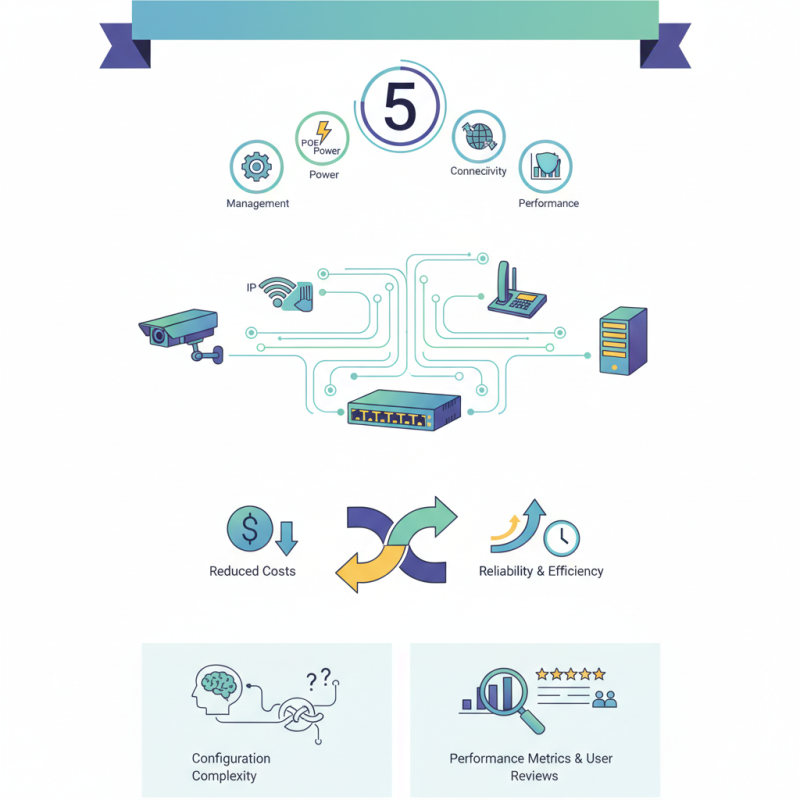
An L2 Managed PoE Switch enables effective network management and power over Ethernet (PoE) capabilities, allowing businesses to streamline operations. By deploying such switches, organizations will likely reduce operational costs and ensure reliable connectivity. Fast, scalable, and secure, these devices cater to a variety of network needs. It’s essential to understand not only their benefits but also the challenges they present, such as the complexity in configuration and management.
As we delve into the top five L2 Managed PoE Switches available today, we must consider performance metrics, user reviews, and long-term reliability. The right choice could enhance productivity and future-proof your network infrastructure. It's vital to assess both empirical data and real-world applications of these products before making a decision.
Overview of L2 Managed PoE Switches and Their Benefits
L2 Managed PoE switches are essential for modern networks. They provide advanced features for managing power and data. With Power over Ethernet (PoE), these switches simplify installations by delivering power and data over a single cable. This reduces costs and complexity, especially in remote installations.
The benefits of L2 Managed PoE switches are significant. They support multiple VLANs, enhancing network security. Fine-tuning the bandwidth allocation is possible, allowing better traffic management. Organizations can prioritize critical applications, reducing latency and improving performance. Monitoring tools built into these switches offer insights into network health. This enables proactive maintenance and quick issue resolution. However, the configuration may seem complex for beginners, leading to potential misconfigurations.
Reliability is a key feature of L2 Managed PoE switches. They enhance uptime with features like link aggregation and redundancy protocols. That said, these technologies can introduce new challenges. A thorough understanding is crucial to avoid network reliability issues. Documentation can be dense, and navigating it may feel overwhelming. Overall, investing in L2 Managed PoE switches can greatly improve network capacity and management, but careful consideration is needed to maximize their benefits.
Top 5 L2 Managed PoE Switches for Your Network Needs
| Model |
Port Count |
PoE Budget (W) |
Switching Capacity (Gbps) |
Management Features |
| Model A |
24 |
370 |
48 |
VLAN, QoS, SNMP |
| Model B |
48 |
740 |
96 |
VLAN, IGMP Snooping |
| Model C |
16 |
150 |
32 |
Port Mirroring, QoS |
| Model D |
12 |
120 |
24 |
CLI, Web Interface |
| Model E |
8 |
80 |
16 |
Web Management, RMON |
Key Features to Consider When Choosing L2 Managed PoE Switches
When selecting L2 managed PoE switches, key features play a significant role in ensuring network efficiency. One crucial aspect is Power over Ethernet (PoE) capability. According to a report by MarketsandMarkets, the PoE market is expected to reach USD 4.1 billion by 2025, indicating robust growth. This shows an increasing reliance on these switches for powering devices like IP cameras and secure access points.
Another important feature is network management functionality. Managed switches allow for better monitoring and control of data traffic. They often come equipped with features such as VLAN support and QoS (Quality of Service). A survey by IDC found that 70% of organizations prioritize network security in their infrastructure choices. Selecting switches with enhanced security features protects sensitive data and helps maintain network integrity.
Port density is also a fundamental factor. Depending on the scale of your operation, having a sufficient number of ports can affect overall performance. For instance, if a switch offers high port density but lacks adequate power management, it can lead to performance bottlenecks. While many factors come into play, it's essential to assess your specific needs thoroughly. Balancing features with scalability is vital for sustainable network growth.
Top 5 L2 Managed PoE Switch Models and Their Specifications
When selecting the right L2 managed PoE switches, understanding specifications is crucial. These switches offer Power over Ethernet, which simplifies installations. They support various power levels, typically ranging from 15.4 watts to 30 watts per port. This flexibility is essential for devices like IP cameras and VoIP phones, ensuring they receive sufficient power without separate outlets.
Important specifications include the number of ports, throughput, and management features. Most models provide 5 to 48 ports, catering to different network sizes. Look for switches with at least Gigabit speed for optimal performance. Advanced management features, such as VLAN support and QoS, enhance network efficiency. Monitoring capabilities are also key; they help in identifying bandwidth usage and potential bottlenecks.
It's worth noting that choosing the right switch can be complex. Some users might find it difficult to balance power requirements with network performance. Additionally, initial costs can be high, which might deter small business owners. Reflecting on the specific needs of your network can aid in making informed decisions. Understanding the landscape is essential for achieving the best results.
Comparing Performance and Pricing of Leading L2 Managed PoE Switches
When selecting L2 managed PoE switches, understanding performance and pricing is crucial. These switches are essential for powering devices like IP cameras and VoIP phones. Evaluating their features helps you choose the right one for your network.
Features such as port count, power budget, and management capabilities vary. A switch with higher capacity offers better scalability. However, more features often mean higher costs. Balancing your budget with your network's needs is vital. Don't ignore the importance of reliability; a well-functioning switch minimizes downtime.
Tips: Always check power output per port. It’s essential for ensuring devices operate smoothly. Consider the environment where the switch will be deployed. Factors like temperature and humidity can impact performance. Look into support and warranty options as well. A trustworthy vendor can provide assistance when issues arise.
Top 5 L2 Managed PoE Switches Performance Comparison