Top 10 Network Switches for High Performance and Reliability in 2023
In today's fast-paced digital landscape, the importance of reliable and high-performing network infrastructure cannot be overstated. At the heart of this infrastructure lies the network switch, a crucial device that facilitates communication between various network components. As organizations increasingly rely on their networks to support critical operations, understanding the significance of choosing the right network switch has become more essential than ever.
This article will explore the top 10 network switches that excel in performance and reliability for the year 2023. Whether for small businesses aiming for scalability or large enterprises demanding robust data handling capabilities, the right network switch can mean the difference between seamless connectivity and frustrating downtime. We will delve into various features, specifications, and considerations that make these network switches stand out, ensuring that readers can make informed decisions in this pivotal aspect of network management.

Top 10 Network Switches for High Performance and Reliability in 2023
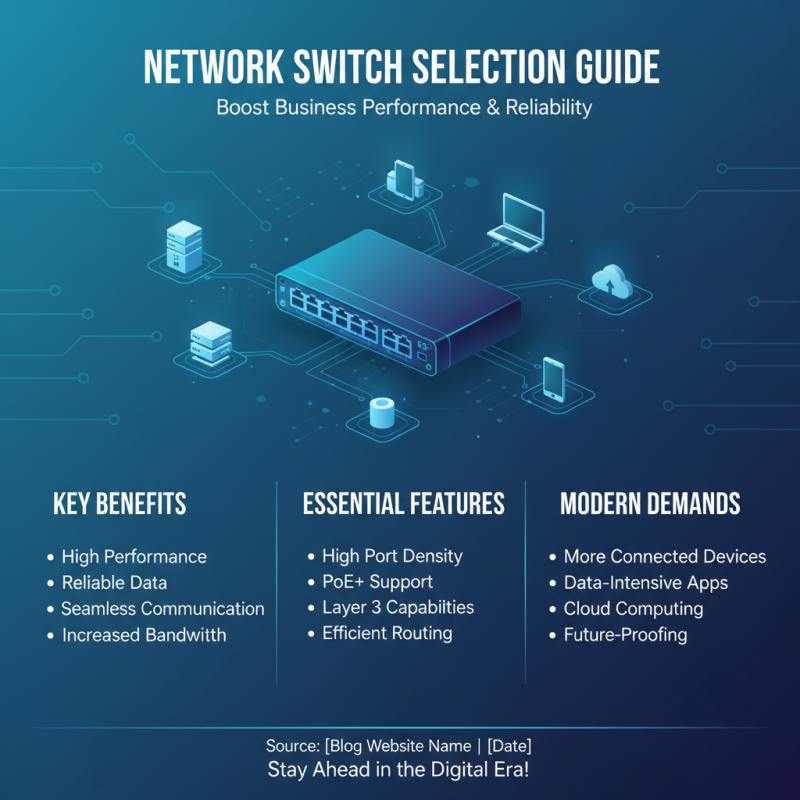
In today's fast-paced digital environment, selecting the right network switch is vital for businesses aiming for high performance and reliability. The demand for effective data transmission continues to escalate, driven by the proliferation of connected devices and applications. A top-tier network switch should facilitate seamless communication and support the increasing bandwidth requirements of modern networks. This means looking for switches that offer advanced features such as high port density, PoE support, and Layer 3 capabilities, which are essential for efficient routing and management of network traffic.
Reliability is equally critical, as downtime can lead to significant productivity losses and impact overall business operations. High-performance switches often come equipped with redundancy features, such as dual power supplies and hot-swappable components, ensuring continuous operation even in the event of hardware failures. Moreover, intelligent traffic management features, like Quality of Service (QoS) settings, can help prioritize critical data flows, minimizing latency and enhancing user experience across various applications. By focusing on both performance and reliability, organizations can build a robust network infrastructure that supports growth and agility in an ever-evolving landscape.
Key Factors Influencing Network Switch Performance: Speed, Capacity, and Latency
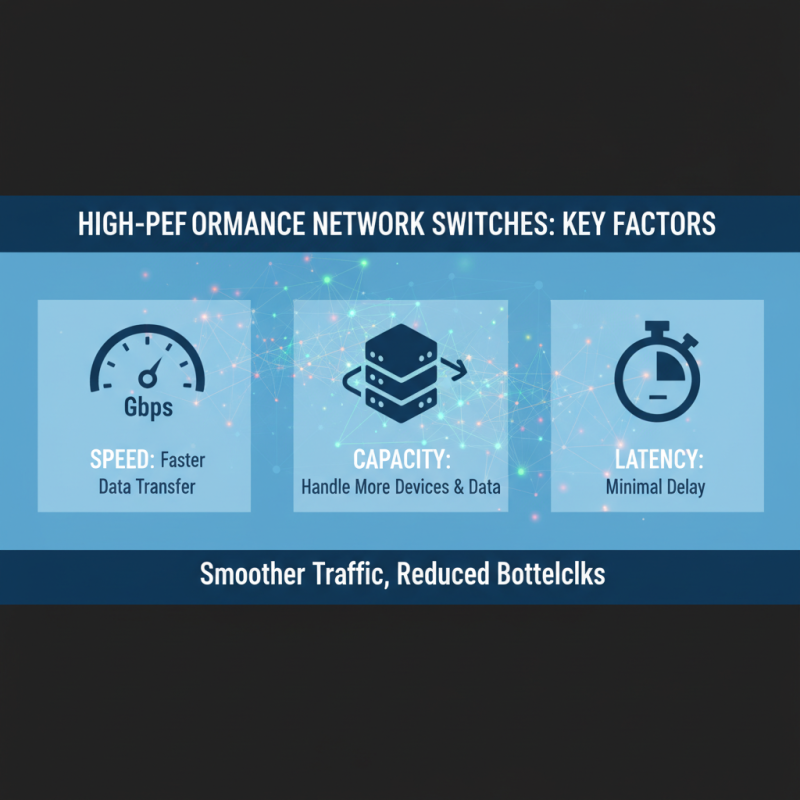
When selecting a high-performance network switch, several key factors play a crucial role: speed, capacity, and latency. Speed determines how fast data can be transmitted across the network. This is typically measured in Gbps (gigabits per second) and can significantly impact overall network performance, especially for data-intensive applications. A switch with higher speed capabilities enables smoother traffic flow, reducing the chances of bottlenecks in data transmission.
Capacity refers to the amount of data a switch can handle at any given time. This is influenced by the number of ports a switch has and its ability to manage simultaneous connections. Higher capacity ensures that a larger number of devices can communicate effectively without sacrificing performance, making it essential for businesses with increasing connectivity demands.
Latency, the delay before data begins to transfer, is another critical factor. Low latency is vital for applications that require real-time interactions, such as VoIP or online gaming. Ensuring that the switch can minimize delays is crucial for maintaining a responsive network.
Tips: When evaluating switches, consider running tests in your specific environment to measure speed and latency. Additionally, assess future growth to ensure your switch can handle increased demands. Lastly, prioritize features like Quality of Service (QoS) which can help manage network traffic efficiently, enhancing performance and reliability.
Comparative Analysis of Managed vs. Unmanaged Network Switches in 2023
In the dynamic landscape of network infrastructure, the choice between managed and unmanaged network switches plays a crucial role in optimizing performance and reliability for organizations in 2023. Managed switches offer advanced features such as VLAN support, traffic prioritization, and remote management, which are essential for complex network environments. According to a report by MarketsandMarkets, the managed switch market is projected to grow significantly, highlighting the increasing demand for features that enhance control and flexibility in network management.
On the other hand, unmanaged switches serve as a cost-effective solution for smaller networks or simpler setups. They provide plug-and-play functionality with no configuration required, making them ideal for businesses looking for ease of use without the need for extensive management capabilities. However, the lack of features like Quality of Service (QoS) can limit performance in high-traffic scenarios. In fact, a study by Research and Markets indicates that while unmanaged switches still hold a significant market share, the shift towards more complex networks is driving businesses to consider the long-term benefits of investing in managed solutions for better scalability and adaptability.
As organizations continue to expand and evolve, the choice of networking equipment will directly impact operational efficiency. The comparative analysis of managed versus unmanaged switches underscores a pivotal decision point for IT leaders in 2023, emphasizing the need to align technology choices with organizational requirements for reliability and high performance.
Insights on PoE Technology and Its Impact on Network Switch Functionality
Power over Ethernet (PoE) technology has revolutionized how network switches operate, providing both data and electrical power over a single Ethernet cable. This dual functionality simplifies the installation process by eliminating the need for separate power sources, which can be particularly advantageous in environments where power outlets are scarce or difficult to access. As a result, network switches equipped with PoE capabilities have grown significantly in popularity, allowing for more flexible deployment of devices such as security cameras, access points, and VoIP phones.
Moreover, PoE technology enhances network reliability by ensuring that connected devices remain operational even during power outages. With the inclusion of uninterruptible power supplies (UPS) and PoE switches, critical infrastructure can maintain uptime, which is essential for businesses that rely heavily on constant connectivity. This technology not only reduces operational costs by minimizing the complexity of installations but also contributes to a more streamlined network management experience, as there is a single point for troubleshooting both power and data issues. Consequently, network switches that integrate advanced PoE features are becoming a staple for organizations seeking high performance and reliability in their networking systems.
Evaluating the Best Brands: Reliability Metrics and Industry Reviews for 2023
In 2023, the quest for high-performance network switches revolves around reliability metrics that are essential for efficient data handling and communication. According to the latest industry reports, such as those from Gartner, the need for high reliability in network infrastructure has surged, with 78% of organizations prioritizing uptime and seamless connectivity. These metrics include factors like Mean Time Between Failures (MTBF), packet loss rates, and redundancy features, which significantly influence enterprise decisions.
Moreover, the technological landscape has evolved with standards such as IEEE 802.3ba and 802.1AX gaining prominence. Research from IDC indicates that 65% of enterprises are now investing in switches that adhere to these standards to ensure compatibility and scalability. Comprehensive industry reviews highlight that the TCO (Total Cost of Ownership) associated with high-reliability switches often outweighs the initial investment, leading to decreased operational costs and enhanced performance long-term. The convergence of these metrics not only helps organizations choose the right products but also drives manufacturers to innovate towards greater robustness and lower failure rates.