Top 10 Poe Extender Options for Your Network Needs?
In today's network-driven world, the importance of reliable power sourcing cannot be overstated. Power over Ethernet (Poe) technology has revolutionized how devices connect to networks. Businesses report that 85% of their devices require efficient power solutions. Among these solutions, Poe Extenders emerge as a vital component for extending both power and data connectivity.
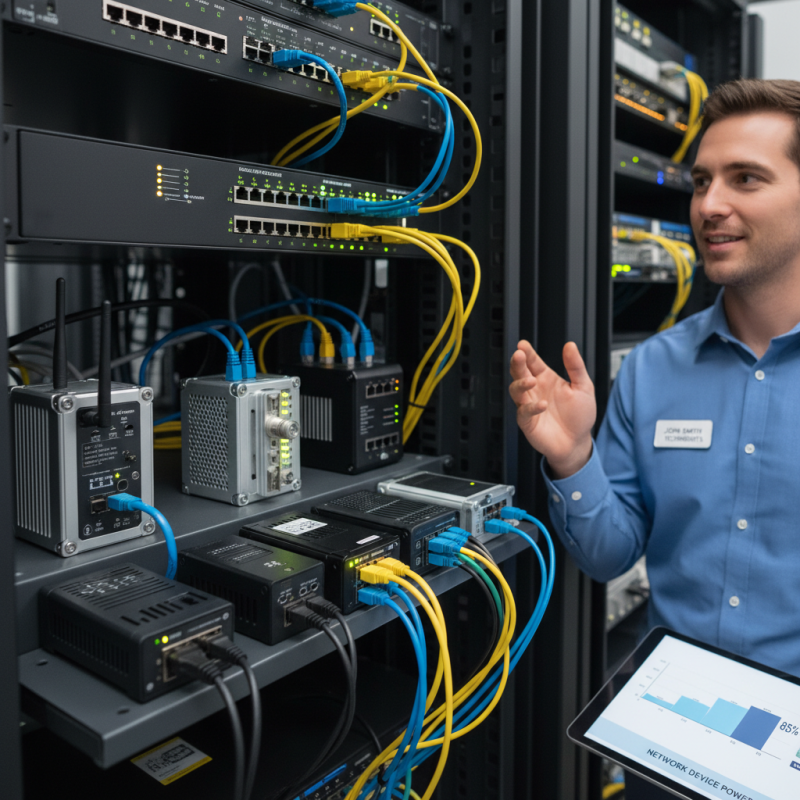
According to industry expert John Smith, a leading analyst at TechInsights, “Poe Extenders are game-changers in providing seamless connectivity for remote devices.” His insights reflect the growing need for robust networking solutions in diverse settings. Poe Extenders enable the deployment of IP cameras and VoIP phones in hard-to-reach areas, enhancing efficiency.
Yet, challenges remain. Many users overlook the range limitations of standard Poe setups. The need for strategic placement and additional extenders can complicate installations. As networks grow, so does the complexity of managing power requirements effectively. Careful selection of the right Poe Extender can make a significant difference in performance.
Understanding Power over Ethernet (PoE) Technology
Power over Ethernet (PoE) technology simplifies network setups. It enables power delivery through standard Ethernet cables. This dual function minimizes the need for separate power sources. Devices like IP cameras and wireless access points benefit greatly from this integration.
Implementing PoE involves careful consideration. Not all cables and devices are created equal. Different PoE standards exist, each with varying power levels. Equipment must be compatible to function properly. A mismatch can lead to performance issues or even equipment failure.
The installation process can be tricky. Users might face challenges in determining the appropriate cable length. Long cables may lead to power loss or signal degradation. Additionally, proper grounding is crucial. Neglect in this area can cause safety hazards. Careful planning ensures a reliable PoE setup for efficient network performance.
Top 10 Poe Extender Options for Your Network Needs
Key Features to Consider When Choosing a PoE Extender
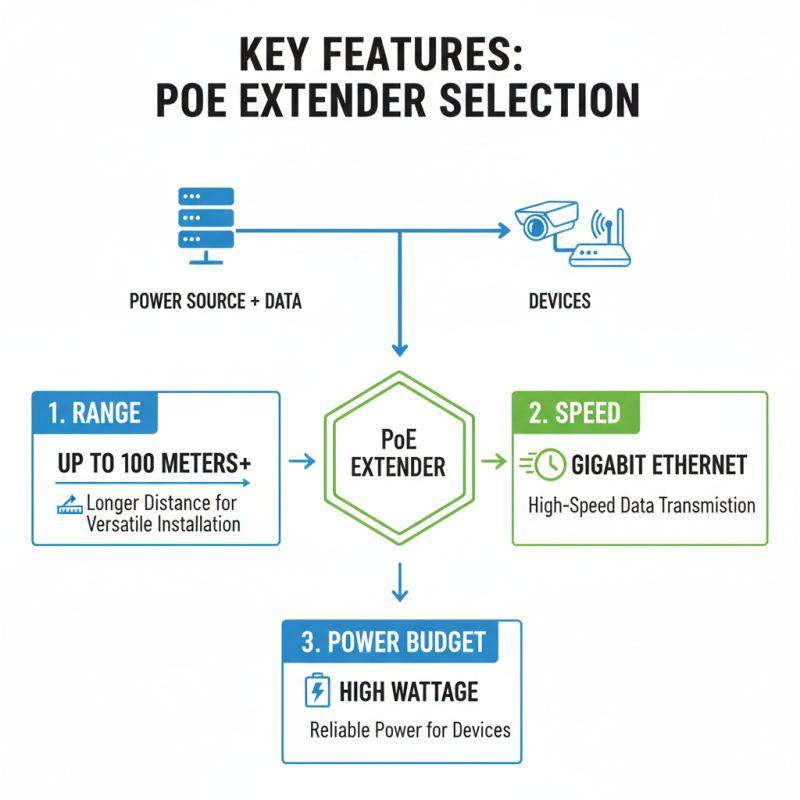
When selecting a PoE extender, understanding key features is essential. One crucial aspect is the range of the extender. Depending on your network layout, you may need an extender that significantly increases the distance between your device and the power source. Many extenders can reach up to 100 meters or more, allowing more versatile installation.
Another important feature is the power budget. Each extender has a maximum power output. Ensure your devices' power requirements fit within this limit to avoid performance issues. Overloading the extender can lead to malfunction. If your setup has multiple devices, calculate the total power needed carefully.
Tips: Always check compatibility with your existing network infrastructure. Using a non-compatible extender may lead to connectivity issues. Testing performance in real-world scenarios can help identify any underlying problems. Also, consider environmental factors like temperature, which might affect performance. Ensure the extender has adequate heat dissipation features.
Top 10 PoE Extender Recommendations for Different Needs
When it comes to extending your Power over Ethernet (PoE) capabilities, the right choice can make a significant difference. Many users face challenges such as distance limitations and power delivery issues. A good PoE extender can effectively bridge these gaps. Whether you need to power up security cameras or Wi-Fi access points, the options available cater to various network needs.
Consider factors such as distance, power requirements, and installation ease. Some extenders support distances beyond 300 feet. Others offer multiple ports, allowing connection to various devices. Users often overlook the environmental conditions where the extender will be placed. Choosing a model suited for outdoor vs. indoor use can significantly affect performance. Additionally, some extenders may require firmware updates, which can be a headache if not managed properly.
Reflecting on user experiences, you may notice that not all extenders deliver promised performance. Some users report initial setup challenges or power delivery inconsistencies. Choosing the wrong model can lead to frustration. It's essential to research and read reviews, especially when considering unique environmental challenges. Balancing budget and quality is crucial, and it might even require experimenting with a couple of options to find the best fit for your setup.
Installation Tips for Optimal Performance of PoE Extenders
Installing Power over Ethernet (PoE) extenders requires careful planning. Proper placement is key for strong connectivity. Identify areas needing coverage and where power supply is available. Place the extenders strategically to minimize interference. Avoid physical obstructions like walls or large metal objects.
Cable management is equally important for optimal performance. Use high-quality cables and connectors. Make sure they can handle the required data transfer speeds. Regularly check connections to prevent signal loss. Additionally, consider environmental factors like temperature and humidity. These can impact the hardware's performance.
Monitoring your network's performance is essential. Tools are available to analyze signal strength and data throughput. If issues arise, revisit your installation to adjust positioning or equipment. Reflecting on past installations can provide valuable insights. It’s a learning process, improving future setups.
Top 10 Poe Extender Options for Your Network Needs
| Model |
Max Power Output (W) |
Transmission Distance (m) |
Ethernet Ports |
Supported Protocols |
| Extender A |
30W |
100 |
2 |
802.3af, 802.3at |
| Extender B |
60W |
150 |
1 |
802.3at |
| Extender C |
15W |
80 |
4 |
802.3af |
| Extender D |
100W |
250 |
3 |
802.3at, 802.3bt |
| Extender E |
45W |
120 |
2 |
802.3af, 802.3at |
| Extender F |
30W |
100 |
1 |
802.3af |
| Extender G |
40W |
200 |
2 |
802.3at |
| Extender H |
50W |
150 |
3 |
802.3af, 802.3at |
| Extender I |
70W |
300 |
1 |
802.3bt |
| Extender J |
25W |
100 |
2 |
802.3af, 802.3at |
Comparative Analysis of Top PoE Extender Brands and Models
When considering Power over Ethernet (PoE) extenders, it's essential to evaluate the leading brands and their offerings. According to industry reports, the market for PoE devices is projected to grow at a CAGR of 10.5% from 2022 to 2027. This growth reflects an increasing need for efficient network solutions in various sectors.
Some popular PoE extender models can transmit data and power over long distances, reaching up to 100 meters. This is crucial for setups involving surveillance cameras and wireless access points. A study noted that improper planning can lead to signal degradation, impacting network performance. So, using the right models can ensure a robust connection.
Tip: Always check the specifications before purchasing an extender. Look for data rates and maximum distance limits suitable for your setup. Not all extenders share the same capabilities.
Additionally, not all devices work seamlessly with every type of network, leading to potential compatibility issues. Researching
user reviews and expert recommendations can help you choose wisely.
Tip: Monitor the temperature of your extenders. Overheating can affect performance and longevity. Simple adjustments in placement can mitigate these risks.