- [email protected]
- Mon - Sat at 7:00AM to 9:00PM
Leave Your Message
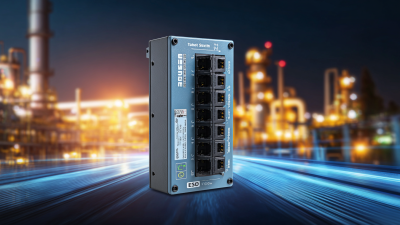
An Industrial Managed Poe Switch is a network device built for demanding industrial environments. It connects cameras, sensors, controllers, access points, and other powered equipment through Ethernet cables. Unlike an unmanaged switch, it provides configuration, monitoring, and control features. These capabilities help engineers understand what happens when a machine stops communicating at 2 a.m.
The hardware matters as much as the software. A reliable model may use a rugged metal enclosure, DIN-rail mounting, redundant power inputs, and a wide operating-temperature range. Some installations also require fiber ports, surge protection, or resistance to vibration and electromagnetic interference. Power over Ethernet can simplify field wiring by carrying data and electrical power through one cable. However, power budgets must be checked carefully. A switch can support many ports, yet still lack enough total power for every connected device.
Configuration features often include VLANs, Quality of Service, port mirroring, ring redundancy, and alarm notifications. These tools can separate control traffic from video data and help maintenance teams locate faults faster. They do not remove every network risk. Poor cable routing, incorrect settings, and neglected firmware can still cause outages.
A practical evaluation should examine traffic loads, temperature, power sources, and recovery needs. It should also consider the staff who will manage the network. Complex menus are not always a sign of superior engineering. Sometimes, simpler documentation prevents more downtime. This guide explains how an Industrial Managed Poe Switch works, where it fits, and which specifications deserve careful attention before installation.
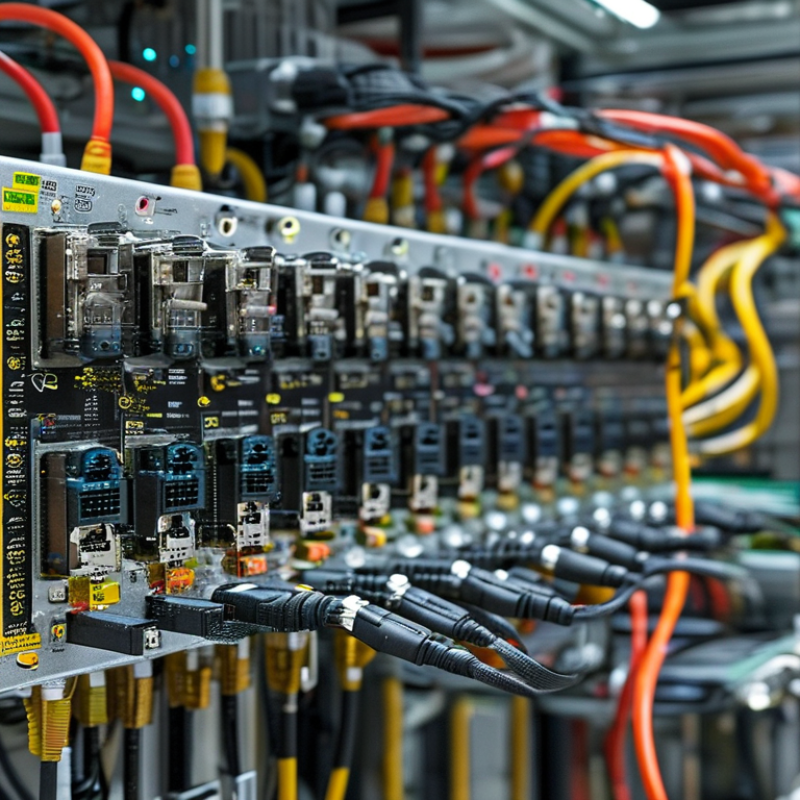
An industrial managed PoE switch is a network device built for demanding sites. It connects Ethernet equipment while delivering electrical power through the same network cable. Cameras, access points, sensors, and control terminals can operate without separate power lines. This reduces wiring around machines and simplifies installation in remote areas.
Its core purpose is controlled, reliable connectivity. Unlike an unmanaged switch, it provides configuration and monitoring tools. An engineer can assign VLANs, prioritize traffic, check port status, and restart a faulty device remotely. For example, a production camera may receive higher priority than routine office traffic. Port diagnostics can also reveal cable faults before they interrupt operations.
Industrial models usually support wider temperature ranges, stronger housings, and protection against vibration or electrical noise. These details matter inside a dusty cabinet or near large motors. In field installations, I have found that clear labeling and documented settings prevent more problems than advanced features alone. Small oversights remain common. A poor power budget can disable several devices at once. Incorrect VLAN settings can isolate equipment unexpectedly. Regular firmware reviews, backup configurations, and load testing improve reliability, but they do not replace careful site planning. A managed PoE switch is a practical control point, not a complete industrial network solution.
| Data Dimension | Typical Specification or Value | Definition and Practical Purpose |
|---|---|---|
| Product Definition | Industrial Ethernet switch with managed networking and Power over Ethernet capabilities | An industrial managed PoE switch connects Ethernet devices, enables centralized network control, and transmits both data and DC power through compatible twisted-pair Ethernet cabling. |
| Core Purpose | Reliable connectivity, remote administration, and centralized device powering | Its primary purpose is to simplify the deployment and operation of industrial cameras, wireless access points, sensors, controllers, and other Ethernet-powered devices in demanding environments. |
| PoE Standard: IEEE 802.3af | Up to 15.4 W per powered port; up to 12.95 W available to the powered device | Often called standard PoE, this level is suitable for many IP phones, basic access points, sensors, and fixed security cameras. |
| PoE Standard: IEEE 802.3at | Up to 30 W per powered port; up to 25.5 W available to the powered device | Often called PoE+, this provides more power for advanced wireless access points, pan-tilt-zoom cameras, video phones, and other higher-consumption devices. |
| PoE Standard: IEEE 802.3bt | Up to 60 W or 90 W per powered port, depending on the implementation | Also known as higher-power PoE, it uses additional pairs in the Ethernet cable and supports devices such as high-performance access points, multi-function cameras, displays, and industrial terminals. |
| Managed Network Functions | VLAN, QoS, port mirroring, link aggregation, STP/RSTP/MSTP, and traffic monitoring | Management features allow administrators to segment traffic, prioritize critical data, prevent switching loops, improve availability, and troubleshoot connected equipment. |
| PoE Management Functions | Port enable/disable, power scheduling, power limits, overload protection, and automatic restart | These functions help control energy use and can automatically recover compatible powered devices after a communication failure or device lockup. |
| Network Redundancy | Ring, dual uplink, redundant power input, and rapid recovery mechanisms | Redundant designs maintain communication when a cable, switch path, or power source fails. Actual recovery time depends on the selected protocol and network topology. |
| Industrial Installation | DIN-rail, wall-mount, or cabinet installation | Industrial mounting options support control cabinets, production lines, substations, transportation systems, and other space-constrained installations. |
| Operating Temperature | Common industrial ranges include approximately −40°C to +75°C, depending on the model | Industrial switches are designed for wider temperature conditions than many office switches. The exact range must be verified in the product specification for the intended site. |
| Power Input | Typically 12 VDC, 24 VDC, 48 VDC, or 54 VDC; some models accept redundant inputs | DC input options allow integration with industrial power systems, control cabinets, batteries, and uninterruptible power supplies. The input voltage must match the switch requirements. |
| Ethernet Port Speed | Commonly 10/100 Mbps or 10/100/1000 Mbps copper ports | Port speed determines the available bandwidth for connected devices. Gigabit ports are useful for high-resolution video, large sensor data sets, and uplink traffic. |
| Uplink Connectivity | Copper or fiber uplinks, with single-mode or multimode fiber options | Fiber uplinks support longer distances and improved resistance to electromagnetic interference, while copper uplinks are convenient for shorter connections within a cabinet or facility. |
| Electromagnetic Environment | Designed for higher resistance to vibration, electrical noise, and industrial interference | Industrial construction and installation practices help maintain stable communication near motors, drives, relays, power equipment, and other sources of electrical disturbance. |
| Enclosure Protection | May be installed in a protected cabinet or supplied with an enclosure rated for environmental protection | Protection against dust, moisture, and water depends on the complete installation and enclosure rating. The switch’s own rating should not be assumed from the application environment. |
| Connected Devices | IP cameras, wireless access points, VoIP phones, sensors, intercoms, access-control devices, and industrial terminals | PoE reduces the need for separate power cables and outlets, which can simplify installation and improve flexibility for distributed devices. |
| Security Capabilities | Access control lists, port security, 802.1X authentication, DHCP protection, and network segmentation | Security features help restrict unauthorized access, separate operational traffic, and reduce the risk of misuse or disruption on industrial networks. |
| Monitoring and Diagnostics | SNMP, web management, command-line interface, event logs, port statistics, and alarm outputs | Monitoring tools provide visibility into link status, errors, bandwidth usage, power delivery, and environmental or hardware alarms. |
| Key Benefits | Reduced cabling, centralized management, flexible deployment, and improved serviceability | Combining switching and power delivery in one device can reduce installation complexity and make remote maintenance more efficient. |
| Important Selection Criteria | PoE budget, per-port power, port speed, uplink type, temperature range, redundancy, mounting, and management features | The switch should be selected according to the connected devices’ power demand, network bandwidth, environmental conditions, and required availability level. |
| Primary Limitation | Total power budget and Ethernet distance constraints | The aggregate PoE budget must be sufficient for all powered devices, and standard copper Ethernet links generally have a maximum channel distance of 100 meters unless suitable extension or fiber solutions are used. |