Leave Your Message

China Best IP67 PoE Splitter for Global Buyers?

Choosing the China Best Ip67 Poe Spiltter for global buyers requires more than comparing prices. The device must survive dust, water exposure, voltage variation, and long outdoor cable runs. A dependable splitter converts PoE power into stable output for cameras, sensors, access points, and industrial terminals. Its enclosure rating matters. So do thermal design, connector sealing, surge protection, and tested power efficiency.

Robert Metcalfe, Ethernet co-inventor and networking pioneer, famously said, “The value of a network is proportional to the square of the number of connected users.” His observation remains practical today. Every connected endpoint increases the importance of reliable power delivery. A weak splitter can interrupt an entire installation. A properly selected Ip67 Poe Spiltter helps reduce that risk through sealed construction and predictable performance.

Global buyers should examine input standards, output voltage, maximum wattage, IEEE compatibility, cable length, and operating temperature. Ask for test reports, not attractive claims. Check whether IP67 protection applies to the complete assembly or only the housing. That detail is easy to miss. It can become expensive.

Factory experience also matters. Suppliers should provide samples, burn-in results, wiring diagrams, and clear warranty terms. Still, no product is perfect. Installation quality, cable damage, condensation, and incorrect loading can defeat a strong design. This guide evaluates practical specifications, supplier credibility, and field suitability. It aims to support careful decisions, not merely promote the cheapest option.
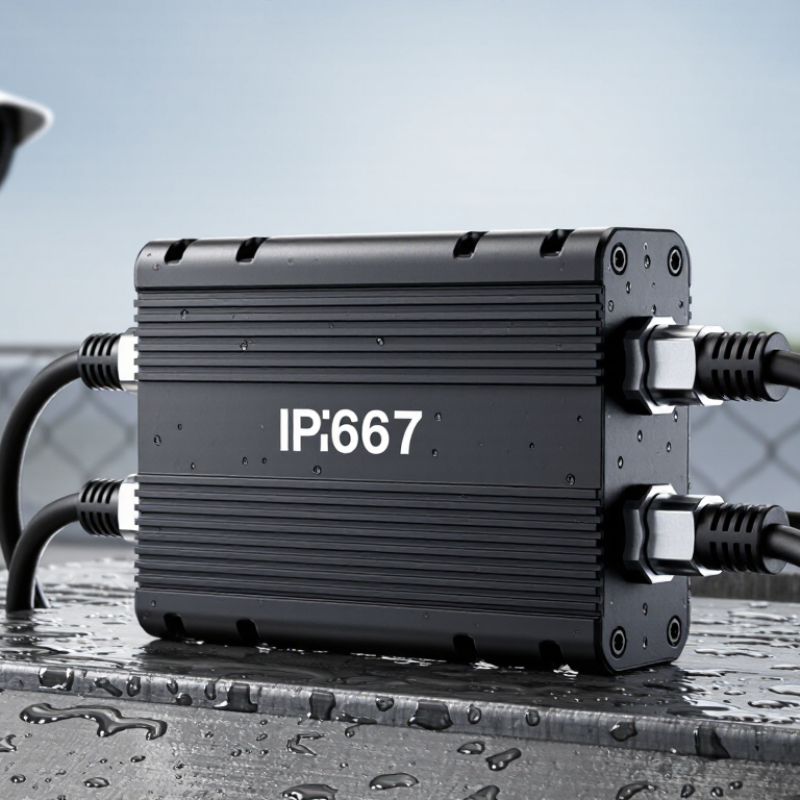
China Best IP67 PoE Splitter for Global Buyers?

What Is an IP67 PoE Splitter and How Does It Work?

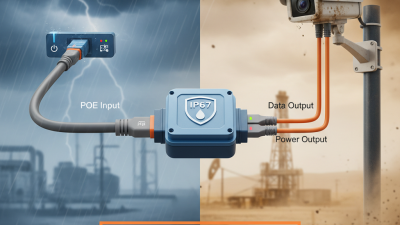
An IP67 PoE splitter receives both network data and electrical power through one Ethernet cable. It then separates these signals for a non-PoE device. The data continues through an Ethernet port, while the power output feeds equipment such as cameras, sensors, or access controllers. Many models convert PoE input into 5V, 9V, 12V, or 24V DC output. Check the required voltage carefully.

IP67 means the enclosure is dust-tight and protected against temporary water immersion. Laboratory testing usually covers immersion up to one meter for 30 minutes. It does not mean permanent underwater operation. A sealed connector, correct cable gland, and properly closed housing still matter. One loose connection can weaken the entire installation. In outdoor tests, water often enters through the cable route, not the splitter body.

For global buyers, compatibility deserves practical attention. Confirm the PoE standard, available wattage, output voltage, Ethernet speed, and operating temperature. A splitter may accept power but still fail when the connected device demands more energy. I have found that short cable tests can hide voltage loss on longer outdoor runs. Test the complete cable length before deployment. Metal mounting surfaces may also require careful grounding and corrosion checks. IP ratings describe enclosure protection, not product quality, thermal performance, or network stability. Some specifications look impressive on paper. Field conditions can be less forgiving.
Key Specifications for Choosing an IP67 PoE Splitter

Choosing an IP67 PoE splitter requires more than checking the waterproof label. Start with PoE compatibility. Confirm whether the splitter supports IEEE 802.3af, 802.3at, or 802.3bt input power. Match the available wattage with the connected camera, sensor, or access device. A power mismatch can cause random restarts.

Check the output voltage carefully. Common options include 5V, 9V, and 12V DC, but the target device must receive the correct rating. Gigabit Ethernet support is important when outdoor cameras transmit high-resolution video. Also review the splitter’s power efficiency, isolation design, and maximum cable distance. Use shielded connectors where electrical noise or exposed cabling may become a problem.

IP67 protection means the enclosure resists dust and temporary water immersion under defined test conditions. It does not excuse poor installation. Cable glands must be tightened, unused ports sealed, and the housing mounted away from standing water. Operating temperature matters in rooftop cabinets and winter installations. Surge protection is also worth checking, especially on long outdoor cable runs.

Small details matter. In field checks, installers sometimes verify power but forget connector dimensions. That mistake delays commissioning. A practical test should measure output voltage under load, inspect link stability, and confirm heat buildup after several hours. No splitter fits every project. Review the real environment, not only the datasheet.

China Best IP67 PoE Splitter for Global Buyers? - Key Specifications for Choosing an IP67 PoE Splitter

Buyer-oriented comparison criteria for selecting a weather-resistant Power over Ethernet splitter

Specification Recommended Verification Point Common Value or Standard Why It Matters for Global Buyers
Ingress Protection Confirm that the complete assembled product, including connectors and cable glands, is rated IP67. IEC 60529 IP67: dust-tight and protected against temporary immersion in water up to 1 m for up to 30 minutes under test conditions. Suitable for outdoor cabinets, industrial equipment, surveillance installations and other locations exposed to dust or rain. IP67 does not mean protection against pressurized water or permanent submersion.
PoE Input Standard Check whether the splitter accepts IEEE 802.3af, 802.3at and/or 802.3bt power sourcing equipment. 802.3af Type 1: up to 15.4 W PSE output; 802.3at Type 2: up to 30 W; 802.3bt Type 3: up to 60 W; Type 4: up to 90 W at the PSE. Standards-based negotiation improves interoperability with compliant switches and injectors in different markets.
Available Output Power Compare the guaranteed DC output power with the connected device’s maximum consumption and startup demand. Typical product classes include approximately 12.95 W for an 802.3af-powered device and approximately 25.5 W for an 802.3at-powered device, depending on efficiency and implementation. The splitter’s usable output is lower than the power advertised at the PoE source because of cable loss and conversion efficiency.
DC Output Voltage Select a fixed or selectable output that exactly matches the endpoint’s permitted input voltage. Common options include 5 VDC, 9 VDC, 12 VDC and 24 VDC. The actual tolerance must be stated on the datasheet. Incorrect voltage can cause device malfunction or permanent damage. Voltage compatibility should be verified before purchase.
DC Output Current Check the continuous output current and whether the rating applies at the stated ambient temperature. Output current is determined by the power class and voltage; for example, 12 V at 1 A equals 12 W before accounting for conversion losses. A sufficient current margin helps prevent voltage drop, overheating and intermittent endpoint resets.
Ethernet Data Rate Confirm the maximum speed, duplex mode and cable category supported by the data port. 10/100 Mbps is common; Gigabit Ethernet uses 10/100/1000 Mbps over four twisted pairs. Gigabit support is preferable for high-resolution cameras, wireless access points and data-intensive industrial devices.
PoE Pair Support Verify whether power is accepted over two pairs or four pairs and whether the wiring follows the applicable IEEE pinout. 802.3af and 802.3at use two-pair powering; higher-power 802.3bt operation can use all four pairs. Pair compatibility affects power delivery, cable selection and interoperability with existing network infrastructure.
Connector and Cable Interface Review connector type, shielding, sealing method, cable diameter range and field-termination requirements. RJ45 Ethernet interfaces are common. Outdoor assemblies may use sealed RJ45 couplers, M12 connectors or cable glands. A sealed housing can lose its environmental rating if an incompatible connector or incorrectly sized cable is installed.
Operating Temperature Compare the full operating range with the minimum and maximum temperatures at the installation site. Industrial products commonly specify ranges such as −40°C to +75°C, but the exact rating varies by design. Temperature affects power capacity, sealing materials, startup reliability and service life.
Isolation and Protection Look for input-to-output isolation, overcurrent protection, short-circuit protection and surge specifications. Protection features vary. Outdoor deployments may require a stated Ethernet surge rating and a suitable external grounding or surge-protection plan. Protection reduces downtime and equipment damage caused by wiring faults, lightning-induced transients or unstable loads.
Installation Method Check whether the enclosure supports wall mounting, pole mounting, DIN-rail mounting or cable suspension. Compact sealed housings are often installed inside outdoor junction boxes or fixed directly near the endpoint. The mounting method influences cable stress, drainage, service access and long-term mechanical stability.
Compliance Documentation Request a datasheet, test report or declaration covering IP rating, electrical safety, EMC and applicable regional requirements. Relevant documentation may reference IEC 60529, IEEE 802.3 and regional conformity requirements such as CE, UKCA or FCC, when applicable. Traceable documentation supports customs clearance, project approval, system integration and after-sales service.
Testing Before Deployment Test the complete PoE source, splitter, cable, connector and endpoint as one assembled system. Verify link speed, PoE negotiation, output voltage, load current, temperature rise and water-sealing installation. System-level testing reveals compatibility and installation problems that may not appear when components are tested separately.
Selection note: IP67 describes enclosure protection under defined test conditions; it does not by itself guarantee PoE compatibility, surge immunity, continuous underwater operation or performance at every temperature. Always verify the complete product datasheet and installation instructions.

Why Source IP67 PoE Splitters from Chinese Manufacturers?

Why Source IP67 PoE Splitters from Chinese Manufacturers?

Chinese manufacturers offer practical advantages for buyers seeking IP67 PoE splitters for outdoor networks. Many factories combine injection molding, PCB assembly, and final testing under one roof. This can shorten production cycles and reduce communication delays. Buyers can request specific input voltages, connector types, cable lengths, and mounting options. A splitter may serve a security camera, wireless access point, or industrial sensor.

The IP67 rating matters, but it should not be accepted from a datasheet alone.

Experienced buyers should request test reports, sealing details, and sample units. Inspect the gasket, cable entry, and enclosure screws carefully. A sample exposed to rain and temperature changes can reveal weak points quickly. PoE compatibility also deserves attention. Confirm power input, output voltage, wattage, and protection against overload or short circuits. Small differences can cause field failures.

Chinese suppliers often support flexible order quantities and private technical specifications.

They may also provide production photos, inspection records, and traceable batch information. This improves reliability for distributors and system integrators.

Still, the lowest quotation is not always the best value. Some products look rugged but use thin seals or poorly controlled components. That is easy to miss. Independent inspection may add cost, yet it can prevent expensive replacements. Buyers should compare engineering support, test discipline, packaging quality, and after-sales response—not only unit price.

How to Compare Quality, Compatibility, and Certifications

For global buyers, quality starts with the enclosure, not the sales description. IP67 means protection against dust and temporary water immersion under defined test conditions. It does not guarantee long-term outdoor performance. Check the gasket, cable glands, connector seals, and housing material. A reliable PoE splitter should also manage heat during continuous operation. Measure its surface temperature after several hours under full load. Short tests can mislead.

Compatibility requires more than matching voltage. Confirm support for IEEE 802.3af, 802.3at, or 802.3bt, depending on the power source and device. Check input voltage, output voltage, wattage, data speed, connector type, and polarity. Some equipment uses passive PoE, which may not negotiate power safely. Test the splitter with the actual camera, access point, cable length, and network switch. Bench testing alone is insufficient.

Certification documents should be traceable and relevant to the exact model. Ask for an IP test report based on IEC 60529, plus EMC and electrical safety records. Depending on the market, buyers may also need CE, FCC, RoHS, or other regional compliance evidence. A printed logo proves little. Verify the certificate number, testing laboratory, product revision, and issue date. I have seen attractive specifications hide weak thermal data. My comparison sheets are never perfect, so I leave space for follow-up testing and supplier clarification.

What Global Buyers Should Check Before Ordering

China Best IP67 PoE Splitter for Global Buyers?

A reliable IP67 PoE splitter should match your complete installation, not only its enclosure rating. Check whether the input supports IEEE 802.3af, IEEE 802.3at, or IEEE 802.3bt. Confirm the delivered output voltage, current, and maximum wattage. A mismatch may cause unstable cameras, access points, or sensors.

Inspect the housing details carefully. Look for sealed cable glands, corrosion-resistant materials, and tested connectors. IP67 protects against dust and temporary water immersion, but it does not guarantee resistance to sunlight, salt spray, or repeated freezing.

Ask for test reports, operating-temperature data, surge protection details, and isolation specifications. Request samples before placing a large order. Bench testing often reveals heat buildup that product sheets omit.

Global buyers should also verify connector types, cable length, pin assignment, and regional compliance documents. Ask how each unit is tested before shipment.

Serial tracking and clear warranty terms matter when equipment is installed far from your service team. A low price can hide weak thermal design or inconsistent output.

I have seen buyers focus on waterproofing and overlook voltage tolerance. That mistake is expensive. Even experienced purchasers can miss one detail. Allow space for inspection, installation errors, and future replacement.