Leave Your Message

China Top Outdoor PoE Switch Manufacturers for Global Buyers

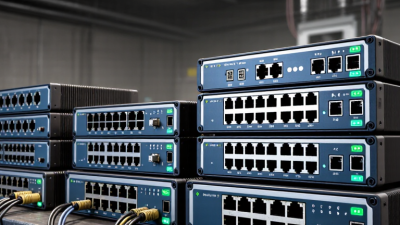
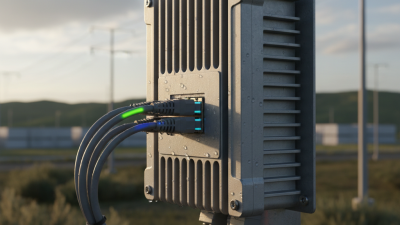
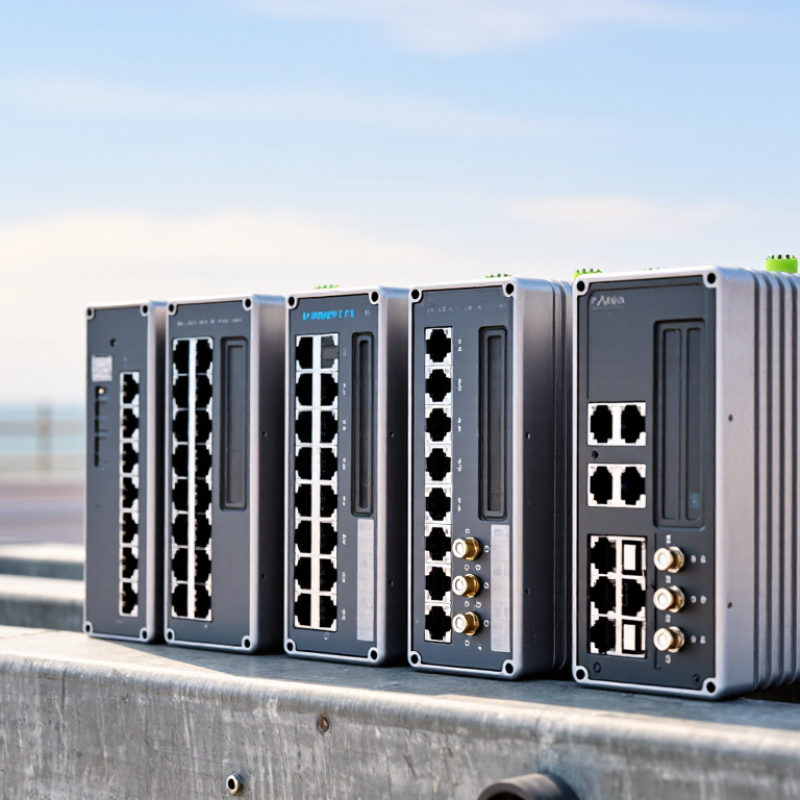
Choosing the right Outdoor Poe Switch manufacturer requires more than comparing prices or product photos. Global buyers need stable power delivery, weather protection, and dependable network performance in demanding environments. China has become a major sourcing hub for outdoor networking equipment, supported by mature electronics manufacturing and broad customization capabilities. However, supplier quality can vary considerably.

This guide introduces leading China-based manufacturers for outdoor PoE applications. It focuses on practical factors that purchasing teams can verify, including IP ratings, operating temperature, surge protection, PoE standards, port design, and factory testing. A reliable manufacturer should explain how its switches perform near coastal areas, construction sites, security systems, and outdoor Wi-Fi installations. Clear datasheets matter. So do real test records.

Experience reveals small details. Cable glands must seal correctly. Heat should escape without exposing internal components. Power budgets must match connected cameras or access points. These points often decide whether a network remains stable after heavy rain or summer heat. No supplier is perfect. Some manufacturers may present impressive specifications but provide limited field evidence or after-sales support. Buyers should question unclear claims and request samples before placing large orders.

The following overview helps international purchasers compare manufacturers with greater confidence. It considers engineering capability, production consistency, certifications, communication, and long-term service. The goal is not to promote one factory blindly. It is to support informed decisions based on measurable performance, documented experience, and realistic project requirements.
China Top Outdoor PoE Switch Manufacturers for Global Buyers

What Defines a Reliable Chinese Outdoor PoE Switch Manufacturer

For global buyers, a reliable Chinese outdoor PoE switch manufacturer must prove performance beyond a product catalogue. MarketsandMarkets estimates that the global Power over Ethernet market may grow from about USD 1.3 billion in 2023 to USD 2.5 billion by 2028. That growth raises quality expectations, especially for surveillance, wireless access, and industrial networks.

Outdoor reliability begins with measurable protection. Buyers should request IP65 or IP66 test records, surge protection details, and operating-temperature data. A credible factory should explain whether its products support IEEE 802.3af, IEEE 802.3at, or IEEE 802.3bt standards.

Power budgets matter. A switch may advertise eight ports, yet deliver limited power when all ports operate together. That detail can disappoint installers.

Look for traceability, burn-in testing, and sample reports from independent laboratories. IEC 60529 defines the IP enclosure ratings, while IEEE 802.3bt can deliver up to 90 watts from power-sourcing equipment under defined conditions. These figures are useful, but they do not replace field validation. Ask for tests with long cable runs, dust exposure, voltage fluctuation, and high humidity. Real sites are rarely polite.

A dependable manufacturer also maintains firmware records, spare-part plans, and responsive engineering support.

During factory audits, inconsistent labeling or incomplete thermal data should slow the purchase decision. I would still challenge every impressive claim. Some documentation looks polished, but practical evidence remains thin. Reliability needs proof.

Core Features of Outdoor PoE Switches for Global Networks

Outdoor PoE switches must survive conditions that indoor equipment rarely faces. Enclosures should offer at least IP65 protection against dust and water jets. For exposed sites, IP67 is safer. Operating temperature also matters. A roadside cabinet may shift from -40°C to 75°C within one day. IEEE 802.3bt supports up to 90 watts from the power-sourcing equipment, enabling cameras, wireless access points, and sensors with higher power demands. However, the usable device power is lower. Cable loss and heat reduce the margin.

Global network planning needs more than a high PoE budget. Surge protection, grounding, redundant power inputs, and fiber uplinks reduce failure risks across long outdoor runs. Managed models should provide VLAN control, port isolation, SNMP alerts, and real-time power monitoring. MarketsandMarkets estimated the Power over Ethernet market at about USD 1.9 billion in 2024, with continued growth through 2029. That expansion reflects wider deployment, not guaranteed reliability. Poor thermal design can still damage an otherwise compliant switch.

Field testing often reveals the uncomfortable details. A sealed enclosure may trap heat. A long copper cable may pass data but fail under full power. Buyers should request test reports for temperature cycling, surge resistance, ingress protection, and PoE interoperability. The IEC 60529 rating describes enclosure protection, but installation quality remains decisive. Allow space around the housing. Check grounding twice. Even strong specifications need local validation.

How China’s Leading Manufacturers Compare in Quality and Scale

China’s leading outdoor PoE switch manufacturers compete through engineering depth, production scale, and export reliability. Their strongest products often use sealed aluminum housings, waterproof cable glands, and wide-temperature components. These details matter. A credible supplier should provide IP ratings, surge protection data, thermal test results, and clear port specifications. Photographs alone cannot prove durability.

Quality levels can differ even among large factories. Some manufacturers operate automated assembly lines and dedicated aging rooms, while others depend heavily on manual inspection. Larger facilities may offer stable component purchasing, faster replacement support, and stronger customization capacity. However, scale does not automatically guarantee better field performance. A smaller specialist may control firmware and testing more carefully. That gap matters.

Global buyers should compare sample units under realistic conditions. Run every PoE port near its rated load, test data links through long outdoor cable, and check recovery after power interruptions. Review test reports, material certificates, warranty terms, and production records. Ask how failed units are traced. Weak answers deserve attention. One practical concern is documentation: some factories provide polished specifications but limited evidence from installed projects. Buyers should also inspect packaging, connector protection, and spare-part availability before approving bulk orders. Mistakes happen. Reliable manufacturers admit them, measure them, and improve the next production batch.

China Top Outdoor PoE Switch Manufacturers for Global Buyers - How China’s Leading Manufacturers Compare in Quality and Scale

Comparison Dimension Export-Grade Benchmark Quality and Scale Indicator Recommended Buyer Verification
PoE Standard Support IEEE 802.3af, 802.3at, or 802.3bt, depending on the required power level. Shows whether the product is suitable for IP cameras, wireless access points, LED systems, and other powered devices. Request the exact IEEE PoE type, per-port power budget, total PoE budget, and product test report.
Maximum PoE Output IEEE 802.3af provides up to 15.4 W at the power-sourcing equipment; 802.3at provides up to 30 W; 802.3bt Type 3 and Type 4 provide up to 60 W and 90 W respectively. Higher power capacity supports demanding devices while requiring stronger thermal and power designs. Check power output under full-port load instead of relying only on the product label.
Outdoor Enclosure Protection IP65 protects against dust ingress and water jets; IP67 additionally supports temporary immersion under IEC 60529 test conditions. Indicates suitability for exposed installations, cabinets, roadside networks, and surveillance sites. Ask for the IP test standard, test conditions, enclosure drawings, and cable-gland protection details.
Operating Temperature Industrial outdoor models commonly specify extended ranges such as -40°C to +75°C, but the approved range is product-specific. Reflects component selection, thermal design, firmware stability, and environmental testing capability. Verify temperature performance with environmental-chamber test records at full PoE load.
Network Port Configuration Common configurations include 4, 8, 16, or 24 PoE ports, with uplink options such as Gigabit Ethernet, SFP, or SFP+. A broader portfolio helps manufacturers serve residential, commercial, industrial, and metropolitan network projects. Match port count, uplink speed, fiber distance, switching capacity, and packet-forwarding rate to the project.
Switching Capacity A non-blocking design should provide sufficient switching capacity for the total port speed; an 8-port Gigabit design commonly requires at least 16 Gbps of full-duplex switching capacity. Helps distinguish stable high-traffic designs from products intended only for light loads. Request the switching-capacity calculation, forwarding rate, buffer size, and full-load test results.
Surge and Lightning Protection Outdoor Ethernet designs should include documented surge protection and grounding provisions appropriate to the installation environment. Demonstrates attention to long-term reliability on cable runs exposed to electrical transients. Request IEC 61000-4-5 test levels, protection-circuit specifications, grounding instructions, and test reports.
Electromagnetic Compatibility Export products should be evaluated against applicable EMC requirements, including conducted and radiated emissions and immunity tests. Indicates readiness for regulated markets and reduced interference risk in dense installations. Review CE, FCC, or destination-market technical files and the applicable EN or IEC test standards.
Manufacturing Quality System ISO 9001-based process control, incoming inspection, automated optical inspection, functional testing, and traceable final inspection. Shows whether quality is controlled systematically rather than only through final visual inspection. Request the quality certificate, process flow, inspection records, defect-rate data, and sample traceability.
Production Scalability A scalable supplier should document production lines, assembly capacity, component sourcing, test stations, and peak-season planning. Reduces delivery risk when orders increase from pilot quantities to recurring project volumes. Ask for monthly capacity by model family, standard lead time, capacity reservation policy, and backup component plans.
Customization Capability Typical options include port combinations, firmware settings, enclosure finishes, labeling, packaging, power input, and mounting accessories. Indicates engineering depth and the ability to support project-specific deployments. Confirm minimum order quantity, tooling charges, engineering fees, sample approval steps, and change-control procedures.
Reliability Testing Relevant tests may include burn-in, thermal cycling, high-temperature operation, humidity exposure, vibration, ESD, EFT, and surge testing. A wider and repeatable test program generally supports more dependable long-term field performance. Request test duration, sample size, acceptance criteria, failure records, and corrective-action reports.
After-Sales and Warranty Professional suppliers should publish warranty terms, RMA procedures, firmware-support policies, and technical-response channels. Shows operational maturity and lowers the total cost of ownership for global buyers. Compare warranty duration, replacement policy, response time, spare-parts availability, and firmware update practice.
Documentation and Compliance Complete datasheets, installation manuals, declarations, labeling files, wiring diagrams, and destination-market compliance documents. Clear documentation is a practical indicator of export experience and project execution capability. Check document consistency across samples, cartons, labels, firmware versions, and certification records.

Technical values are based on widely used IEEE, IEC, and international network-equipment requirements. Final performance should be confirmed against the specific model, test report, and destination-market regulations.

Certifications, Customization, and Export Services for Overseas Buyers

For overseas buyers, selecting a China-based outdoor PoE switch manufacturer requires more than comparing unit prices. Experienced procurement teams inspect certification files, test methods, and production consistency. Relevant documents may include CE, FCC, RoHS, ISO 9001, and reports for IEEE 802.3af, IEEE 802.3at, or IEEE 802.3bt compliance. Requirements vary by destination. A certificate copied from an old model is not enough.

Outdoor projects also need physical evidence. Ask for enclosure material, IP rating tests, surge protection data, operating temperature ranges, and sample photographs. A switch installed beside a dusty road faces different risks from one mounted near a coastal tower. Customization may cover port numbers, SFP uplinks, power budgets, VLAN functions, firmware language, labels, and mounting brackets. Small changes can affect heat dissipation and reliability. That part is often underestimated.

Export service should be practical and traceable. Reliable manufacturers can prepare commercial invoices, packing lists, certificates of origin, test reports, and clear HS-code information. They should also explain warranty coverage, replacement procedures, lead times, and Incoterms before payment. Samples reveal more than brochures. Check connector quality, cable glands, web-interface stability, and PoE performance under load. Even capable factories may communicate slowly during peak seasons, so response times deserve written agreement. No supplier fits every installation.

How Global Buyers Can Evaluate and Select the Right Supplier

Selecting an outdoor PoE switch supplier requires evidence, not attractive specifications. IEEE 802.3bt supports up to 90 watts from the power source, but usable power at the device is lower. Buyers should request port-level power budgets, efficiency curves, and thermal test results. Outdoor enclosures should also show tested IP protection, operating temperatures, grounding methods, and surge resistance under IEC 61000-4-5 conditions.

Reliability deserves practical scrutiny. The Uptime Institute’s 2024 Global Data Center Survey reported that more than half of respondents experienced an outage within three years. Outdoor network failures can be even harder to repair. Ask suppliers for burn-in records, failure-rate definitions, repair procedures, and spare-parts locations. A claimed MTBF figure is not enough. I would test sample units in heat, humidity, vibration, and full PoE load before approving a large order. That step may feel slow.

Market evidence also matters. Grand View Research projects continued growth in industrial Ethernet through 2030, driven by automation and connected infrastructure. This growth attracts inexperienced suppliers. Check factory ownership, engineering staff, production traceability, and independent certification records. Verify whether certificates match the exact model, not a similar series. Request firmware-update policies and vulnerability response contacts. Review warranty exclusions carefully, especially for lightning damage and condensation. A supplier that answers precisely, supplies raw test data, and accepts third-party inspection is usually more dependable than one offering the lowest quotation.