What Is the Best Industrial Managed PoE Switch in China?
Choosing the best Industrial Managed Poe Switch in China is not simply a matter of counting ports. A switch beside a production line must handle connected devices, electrical noise, heat, and limited cabinet space. A model that works well in a clean office may struggle near motors or long cable runs. Small details matter: operating-temperature range, PoE power budget, port speed, and the way the unit mounts in a control cabinet.
This guide explains how to compare industrial managed switches using practical requirements, not headline claims alone. It considers management features such as VLANs, traffic prioritization, network monitoring, and redundancy options. It also examines PoE standards and total power needs, since cameras, access points, and sensors may draw different amounts. Check product documentation for environmental ratings and certifications, and confirm they apply to the specific model and configuration. Ask suppliers about firmware updates, warranty terms, and technical support. Those details can shape long-term reliability. They are easy to miss.
There is no universal winner. A remote pump station may need a different design from a busy factory cell. One detail is easy to overlook: a generous PoE budget means little if the switch cannot dissipate heat in a sealed cabinet. We should be cautious here. This comparison will help buyers identify suitable options, understand trade-offs, and prepare questions before requesting a quote. The right choice is the one that fits the actual network, power load, and installation conditions—not merely the most impressive specification sheet.
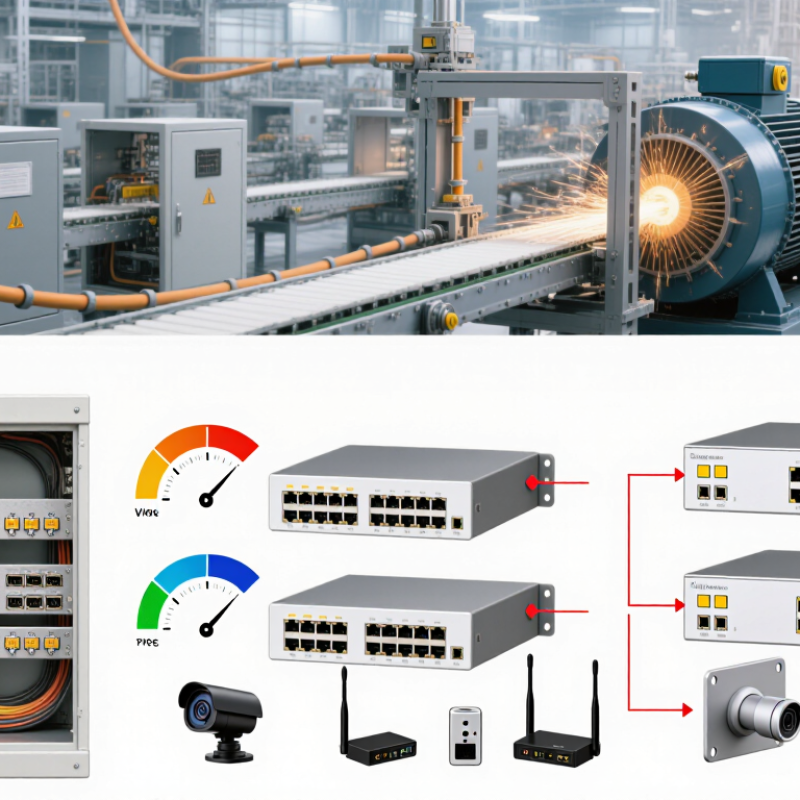
What Is an Industrial Managed PoE Switch?
An industrial managed PoE switch combines Ethernet switching with Power over Ethernet delivery and network management. One cable can carry both data and power to devices such as cameras, wireless access points, and sensors. Fewer local adapters can mean simpler cabinet wiring. It also means the switch’s total PoE budget must match the devices’ requirements.
“Managed” means an administrator can configure and monitor the network rather than relying only on factory settings. Common tools include VLANs to separate traffic, Quality of Service settings to prioritize important streams, and status logs that help identify link or power problems.
Useful details.
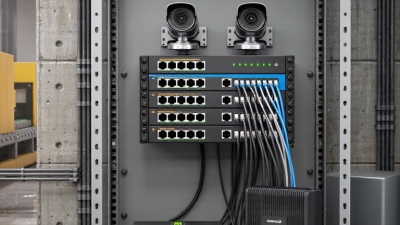
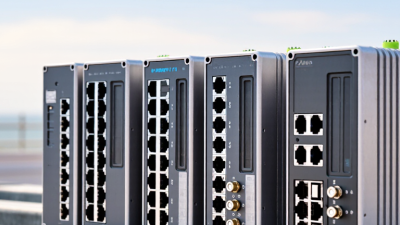
In a workshop cabinet, a technician might check port status before climbing to inspect a camera. Industrial models may offer a wide operating-temperature range, DIN-rail mounting, and redundant power inputs, but specifications differ. Check the actual temperature, power, and protection ratings against the installation site. A rugged housing alone is not a reliability guarantee.
Even careful planning can miss a detail, such as cable length or a device’s startup power draw; verify both before deployment.
How Do Industrial Environments in China Shape Switch Requirements?
China’s industrial sites do not share one operating climate. A coastal processing plant may face humid air and salt exposure; an inland workshop may contend with dust, vibration, and electrical noise. These conditions shape the switch choice as much as port count does. China’s National Bureau of Statistics reported that industrial value added grew 4.6% in 2023, while manufacturing grew 5.0%. The figures signal a broad, active industrial base, not one standard installation. A switch serving cameras and sensors beside a production line needs a suitable operating-temperature range, secure DIN-rail mounting, and PoE capacity for the actual device load. Heat matters.
Climate adds another layer. The World Meteorological Organization’s State of the Climate in Asia 2023 report found the region’s average temperature was 0.91°C above the 1991–2020 average. That regional figure is not a site-level design temperature, but it reinforces the need to check cabinet heat and local conditions. For dusty or damp locations, match enclosure protection to the installation, rather than trusting an indoor rating. Look for managed controls such as port monitoring, alarms, and redundant power inputs where downtime would interrupt operations. A paper specification can still mislead: cable length, enclosure ventilation, and simultaneous PoE demand may change performance. Measure the site before choosing.
Which Features Matter Most in a Managed PoE Switch?
A managed PoE switch should match the load, environment, and maintenance needs of the actual installation. Check each port’s PoE standard and the switch’s total power budget against cameras, access points, and sensors. Leave headroom for startup surges and future devices. Power margin matters. For a warehouse cabinet, also verify operating temperature, surge protection, and redundant power inputs. A feature list alone cannot confirm reliable operation; test representative devices under full load.
Management features matter when faults must be found quickly. Look for VLANs, QoS, port monitoring, SNMP alerts, and clear event logs. These help isolate a failed cable or prioritize control traffic. MarketsandMarkets’ Industrial Ethernet Market report forecast growth from US$10.3 billion in 2023 to US$15.5 billion by 2028, reflecting wider industrial networking needs. NIST SP 800-82 Rev. 3 emphasizes availability, reliability, and security in operational technology environments. Apply that guidance by checking access controls, firmware-update processes, and network segmentation. A useful caveat: ring redundancy can help restore links, but it cannot fix poor cabling. I would still test recovery time on the intended network, not rely on a brochure.
What Matters in a Managed PoE Switch? Maximum Power per Port
PoE capacity is a key selection factor for industrial switches powering devices such as cameras, wireless access points, and sensors.
Values show maximum power supplied by the switch per port: IEEE 802.3af provides up to 15.4 W, 802.3at up to 30 W, and 802.3bt Type 3 and Type 4 up to 60 W and 90 W, respectively. Actual power available to a powered device is lower due to cable losses. Also check the switch’s total PoE budget, port count, operating temperature range, VLAN and QoS controls, and network redundancy features.
How Can Chinese Manufacturers and Models Be Compared?
Comparing Chinese industrial managed PoE switches requires more than checking port counts. Fortune Business Insights valued the global industrial Ethernet market at USD 11.67 billion in 2023 and projected USD 19.25 billion by 2032. That figure covers industrial Ethernet broadly, not PoE switches alone, so treat it as market context—not proof of a model’s quality.
Compare each manufacturer’s operating-temperature range, power budget, redundancy, and management tools. For example, check whether the total PoE output can support every camera at peak load, not just under test conditions. IEEE 802.3bt allows up to 90 watts from the power sourcing equipment, but a switch’s usable budget depends on its design. Look for clear per-port limits, surge protection details, and documented recovery behavior after a power interruption. Small details matter.
Ask for test reports, warranty terms, and firmware support periods. Where possible, compare the same conditions: port count, temperature, input voltage, and PoE load. A polished datasheet can still leave gaps. I would verify noise, mounting clearance, and connector access on the actual unit; these are easy to overlook in a cabinet. Real installations can be less tidy than test benches.
How Should You Select a Switch for Your Application?
Choosing an industrial managed PoE switch in China starts with the devices it must power.
Count cameras, access points, sensors, and spare ports. Then check each device’s PoE standard and maximum draw, including startup demand. A 24-port switch may look generous, but its total power budget can be more important than its port count. Leave practical headroom. Heat changes the picture.
Match the switch to the site. A cabinet beside a production line may face vibration, dust, and wide temperature swings, so check its operating range and mounting method. For network control, consider VLANs, QoS, loop protection, and remote diagnostics. If video traffic runs alongside control data, test uplink capacity under real load. Small details matter. Ask for clear power-budget figures, environmental test information, and local technical support. A polished datasheet can still leave questions unanswered; reviewing a sample configuration before deployment is worthwhile, even if it adds time. Do not choose features just because they sound advanced. Tie each one to a device, failure risk, or maintenance task.